


What's Happening?
A new DIY project demonstrates how to upcycle an old, unused drawer into a functional and aesthetically pleasing paper towel storage shelf. The process involves salvaging a drawer, even if it's scuffed or slightly damaged, as long as its basic structure
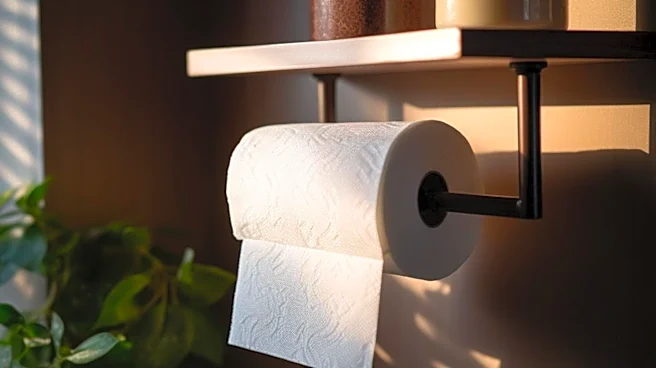
of four sides and a bottom is intact. The drawer is first reinforced, if necessary, and a small wooden piece is added to one side to serve as a shelf edge. After painting the entire piece in a desired color, a wooden dowel is installed between two metal sockets, positioned at least five inches from the top of the drawer, to hold a paper towel roll. The finished shelf is then mounted on a wall, with screws hidden behind the paper towel roll for a clean look. This multifunctional shelf not only provides a dedicated space for paper towels but also offers additional storage for spice jars, kitchen utensils, or decorative items, optimizing kitchen space.
Why It's Important?
This DIY upcycling project holds significance for U.S. households by offering a practical and cost-effective solution for home organization and waste reduction. In an era of increasing environmental awareness, upcycling old furniture components like drawers prevents them from ending up in landfills, contributing to a more sustainable lifestyle. The project addresses a common household need for efficient storage, particularly in kitchens where counter space is often limited. By transforming a discarded item into a functional piece of furniture, it promotes resourcefulness and creativity among consumers. This initiative can empower individuals to engage in sustainable practices at home, reducing their consumption of new goods and fostering a sense of accomplishment through DIY efforts. Furthermore, it highlights the potential for everyday objects to be repurposed, encouraging a broader shift towards circular economy principles within domestic settings.
What's Next?
The popularity of such DIY upcycling projects is likely to continue growing, driven by both economic considerations and environmental consciousness. We can expect to see more online tutorials and resources dedicated to transforming common household items into new functional pieces. This trend may also influence furniture manufacturers and retailers to explore modular designs or offer components that are easily repurposed, catering to a market that values sustainability and customization. Community workshops and educational programs on upcycling could become more prevalent, further empowering individuals with the skills to undertake similar projects. Additionally, the demand for tools and materials suitable for DIY upcycling might increase, leading to innovations in eco-friendly paints, adhesives, and hardware. The long-term impact could be a reduction in household waste and a greater appreciation for the lifecycle of products.
Beyond the Headlines
Beyond its immediate utility, this upcycling project taps into deeper cultural and psychological aspects. It challenges the 'throwaway' culture by demonstrating the inherent value in seemingly discarded items, fostering a mindset of repair and reuse. Ethically, it promotes responsible consumption and reduces the environmental burden associated with manufacturing new products. Culturally, the act of DIY and upcycling can be seen as a form of creative expression and personal empowerment, allowing individuals to personalize their living spaces while contributing to sustainability. It also encourages a connection to the objects we own, moving away from anonymous mass-produced goods towards items with a unique history and a story of transformation. This shift can lead to a more mindful approach to home decor and consumption, where sustainability is integrated into aesthetic and functional choices.