





What's Happening?
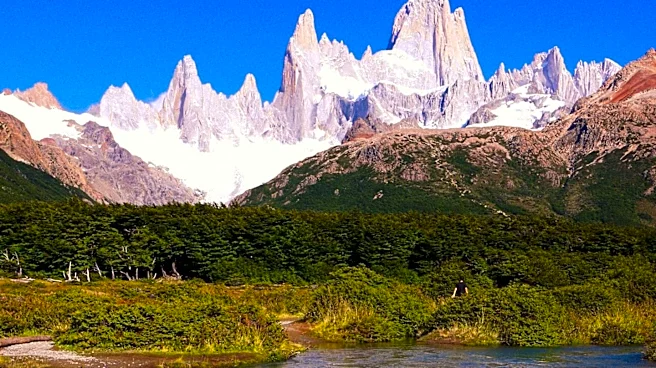
Technology companies are increasingly looking to Argentina's Patagonia region as a prime location for developing mega data centers. This interest is driven by the region's cool temperatures, abundant renewable energy sources, significant shale gas reserves
from Vaca Muerta, and vast uninhabited areas. Pampa Energía, a major electricity generator in Argentina, is actively advocating for a data center project in Neuquén province. This proposed facility would require up to 500 megawatts of energy, sourced from the Vaca Muerta region. The appeal of Patagonia stems from its natural advantages that can significantly reduce operational costs for data centers, particularly cooling expenses. While the region offers substantial potential, challenges related to infrastructure and connectivity still need to be addressed to fully realize these ambitious projects. The current administration under President Javier Milei has also implemented reforms, such as the RIGI incentive regime, which offers tax exemptions and regulatory stability, further attracting foreign investment in sectors like oil, mining, and now potentially technology infrastructure.
Why It's Important?
The growing interest in Patagonia for data centers signifies a strategic shift in how technology giants are seeking to expand their infrastructure globally. Unlike the U.S., where data center expansion faces public backlash over electricity grid strain and environmental concerns, Argentina currently offers a less contentious environment for such developments. This move could position Argentina as a significant hub for digital infrastructure in Latin America, potentially attracting billions in investment and creating new economic opportunities. For U.S. tech companies, establishing data centers in Patagonia could provide a competitive advantage by leveraging lower operational costs and a more favorable regulatory landscape. However, the success of these projects hinges on overcoming existing infrastructure and connectivity hurdles. The development could also lead to increased demand for skilled labor in technology and construction, fostering local economic growth, but also raising questions about the impact on indigenous communities and the environment, particularly concerning energy consumption and land use.
What's Next?
Several key developments are anticipated as tech companies and energy providers move forward with their plans in Patagonia. Pampa Energía aims to finalize initial agreements for energy pricing by the end of 2026, with investors likely to start with smaller pilot projects (20 MW to 40 MW) before scaling up. The construction of electrical infrastructure for a 500 MW facility alone is estimated to cost nearly $900 million. Additionally, the Argentine communications agency plans to establish a second fiber optic cable anchoring station to enhance connectivity in Patagonia, making it more attractive for data center installations. Companies like FlexDomes are actively seeking investors for a 120 MW data center in Neuquén, while Capital Verde in Chubut province plans a 300 MW facility, potentially expanding to 3,000 MW, powered by dedicated wind and solar farms. The upcoming Argentine presidential elections in 2027 and the potential 'Super RIGI' legislative framework, offering even greater tax cuts, are also being closely watched by investors, as political stability and continued incentives will be crucial for long-term commitments.
Beyond the Headlines
The push for mega data centers in Patagonia extends beyond immediate economic gains, touching upon deeper ethical, environmental, and geopolitical implications. The region's vast, sparsely populated landscapes and natural cooling capabilities offer an ideal environment for energy-intensive data centers, but the scale of these projects raises questions about their long-term ecological footprint, particularly concerning water usage and the impact on local ecosystems. The involvement of indigenous Mapuche communities, who have historically clashed with energy companies, highlights potential social and land rights issues that will need careful navigation. Geopolitically, Argentina's efforts to attract major tech investments, bolstered by President Milei's outreach to Silicon Valley leaders, could strengthen its ties with the U.S. and shift the regional balance of digital power. The development also underscores a global trend where countries with abundant natural resources and favorable climates are becoming critical nodes in the world's digital infrastructure, potentially leading to new forms of economic dependency and environmental challenges.