

What's Happening?
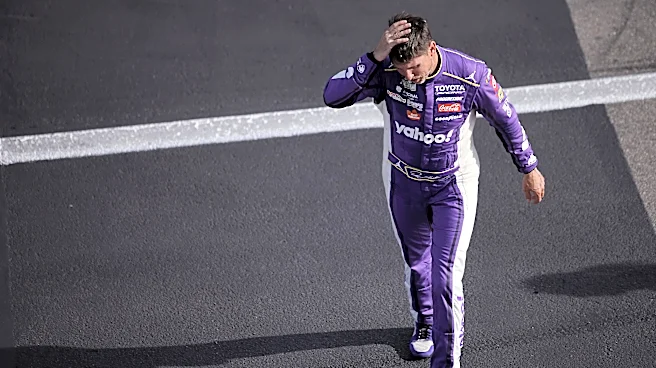
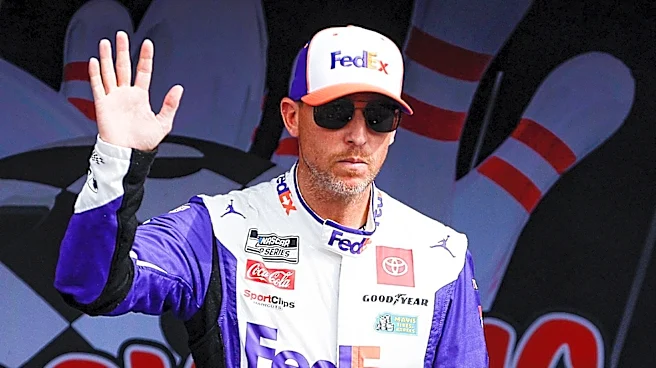
NASCAR veteran Denny Hamlin participated in the 2.4 Hours of LeMullets at the Freedom Factory on November 13, an event featuring Crown Victorias, heavy contact, and spectacular crashes. Hamlin's No. 11 Ford Crown Victoria experienced significant issues,
including a blown engine and a failed right-rear tire, leading to a third-place finish. Despite the car's damage, Hamlin expressed enjoyment of the event, particularly the aggressive racing between Ty Dillon and Carson Hocevar for the lead. He described his car's failure as hitting 'everything but the lottery' and noted that the engine gave out and the tire blew simultaneously while he was battling for second place. The event, which is not NASCAR-sanctioned, allowed for a different style of racing compared to typical Cup Series events, with two-driver teams, mandatory driver changes, and nitrous-equipped vehicles.
Why It's Important?
This event highlights the diverse interests and activities of NASCAR drivers outside of the official Cup Series. While not a points-paying race, Hamlin's participation in the 2.4 Hours of LeMullets demonstrates the drivers' passion for racing in various forms and their willingness to engage with different fan bases. The casual and aggressive nature of the event, where contact is expected and celebrated, offers a stark contrast to the highly regulated environment of NASCAR. This type of participation can help drivers connect with a broader audience and showcase their driving skills in a less conventional setting. For fans, it provides entertaining content and a glimpse into the personalities of their favorite drivers in a more relaxed, yet still competitive, atmosphere. The event also serves as a platform for other racing personalities, like Cleetus McFarland, to interact with mainstream NASCAR figures.
Beyond the Headlines
The 2.4 Hours of LeMullets, and similar non-sanctioned events, represent a growing trend in motorsports where entertainment value and raw racing spectacle take precedence over strict competition rules. This shift caters to a segment of the audience that appreciates the more visceral and unpredictable aspects of racing. Carson Hocevar's aggressive driving and post-race comments, referencing his controversial 2026 Cup season incident, underscore how these events can provide an outlet for drivers to express themselves and engage with past controversies in a lighthearted manner. The participation of established NASCAR drivers like Hamlin in such events blurs the lines between professional, high-stakes racing and grassroots, entertainment-focused motorsports, potentially influencing future formats and fan engagement strategies across the racing world. It also showcases the adaptability of drivers to different vehicle types and racing conditions.