

What's Happening?
Paramount Skydance has completed a $110 billion acquisition of Warner Bros. Entertainment. Discovery. This significant merger brings together a vast array of popular entertainment brands under one new entity, Skydance. The combined company now encompasses
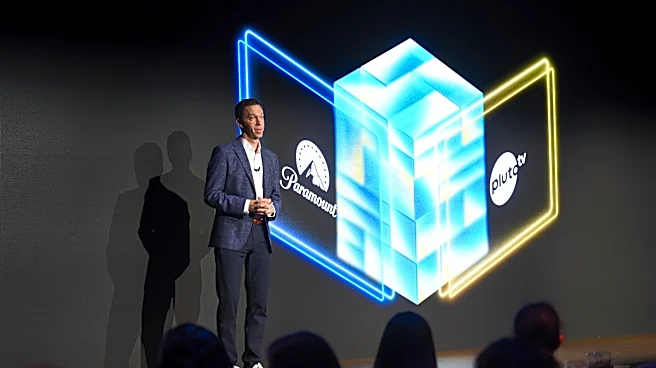
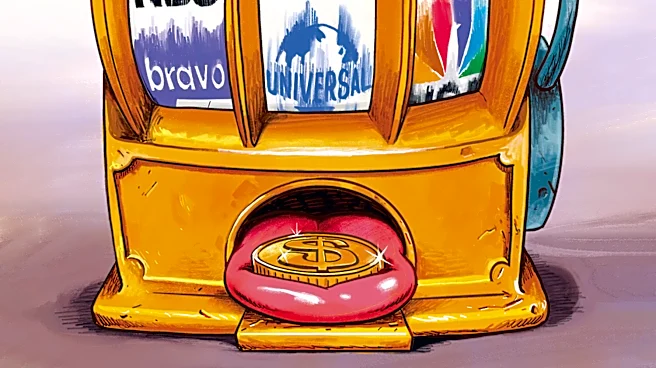
franchises like Harry Potter, HBO, CNN, CBS, Nickelodeon, and Paramount. This move is indicative of a broader trend in the streaming industry, where companies are consolidating content to create more comprehensive bundles for subscribers. The strategic aim is to offer a wider variety of content, from family-friendly shows like SpongeBob to premium series on HBO and live sports on CBS, thereby increasing subscriber retention and reducing cancellations. This consolidation mirrors similar strategies seen with other major players in the streaming market, such as Disney's bundling of Disney+, Hotstar+, Hulu, and HBO Max.
Why It's Important?
This $110 billion acquisition marks a pivotal moment in the U.S. entertainment industry, signaling a return to bundled content models reminiscent of traditional cable television, but delivered through streaming applications. For consumers, this could mean access to a more diverse library of content from a single subscription, potentially simplifying their streaming choices. However, it also suggests a future where streaming services become less fragmented and more akin to the comprehensive, albeit potentially more expensive, packages that streaming initially sought to disrupt. The consolidation aims to create 'stickier' subscriptions by offering something for every member of a household, from children's programming to news and sports. This strategy directly impacts the competitive landscape, as merged entities can leverage their expanded content libraries to attract and retain subscribers, putting pressure on smaller, more niche streaming services.
What's Next?
The immediate future will likely see Skydance focusing on integrating the vast content libraries and operational structures of Paramount Skydance and Warner Bros. Entertainment. Discovery. This integration will involve strategic decisions on content programming, platform consolidation, and subscription tier offerings. The industry will be closely watching how this new mega-bundle performs against existing competitors and how it influences subscriber behavior. There is an expectation that even larger bundles may emerge as companies continue to vie for market share and subscriber loyalty. However, a significant challenge remains in competing with platforms like YouTube, which, according to Nielsen, still commands more U.S. TV viewing than any single media company, largely due to its free, creator-driven content model. The success of Skydance will depend on its ability to not only offer diverse content but also to create compelling value that can draw viewers away from free alternatives.
Beyond the Headlines
This merger highlights a fundamental shift in the streaming wars, moving away from a fragmented landscape of numerous standalone services towards a more consolidated, bundle-centric model. While streaming initially promised an escape from expensive cable bundles, the industry is now evolving to reintroduce similar bundling concepts, albeit through digital apps. This raises questions about consumer choice, pricing strategies, and the long-term viability of niche content providers. The emphasis on creating 'sticky' subscriptions by offering a wide range of content under one umbrella could lead to less innovation in specialized content areas, as the focus shifts to broad appeal. Furthermore, the continued dominance of platforms like YouTube, which offer free content, poses a significant challenge to these subscription-based mega-bundles, suggesting that content quality and user experience, regardless of cost, will remain critical factors in attracting and retaining audiences.