






What's Happening?
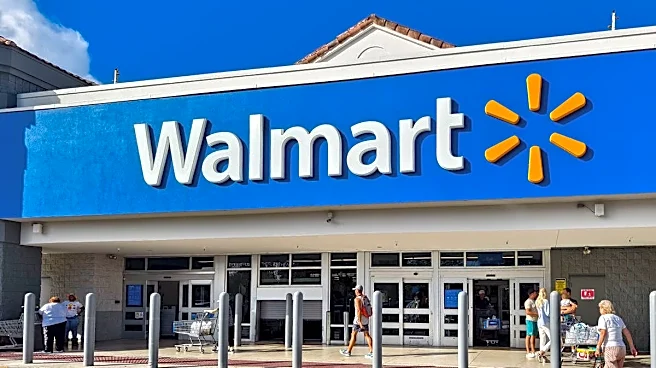
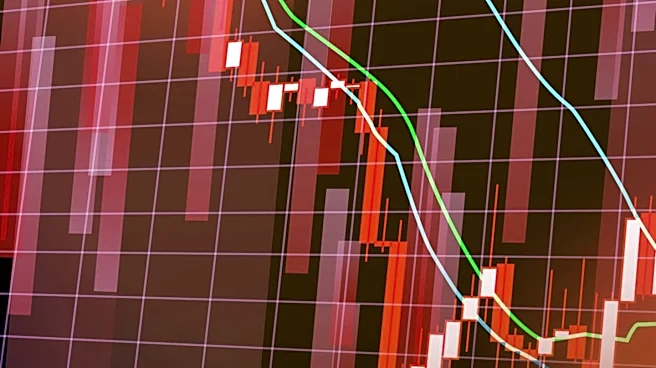
Walmart (WMT) stock experienced its worst single-day drop since 2022, falling 9.15%, despite reporting an earnings beat for the quarter. The retail giant posted revenue of $187.9 billion against an expected $186.8 billion and adjusted EPS of $0.81 versus
an expected $0.7413. However, the market reacted negatively to several indicators of weakening consumer spending. Walmart U.S. comparable sales growth decelerated sharply to 2.6%, down from 4.8% in the prior-year quarter, marking its weakest sales growth in over six years. The company's third-quarter revenue guidance of $185.6 billion at the midpoint also fell short of the expected $188.3 billion. CFO John David Rainey specifically cited 'incremental pressure on the consumer' due to higher fuel prices, noting a 'psychological impact' when gas prices exceeded $4 per gallon, leading consumers to make trade-offs.
Why It's Important?
Walmart's significant stock drop, despite an earnings beat, is a critical indicator of broader consumer spending weakness in the U.S. economy. As the nation's largest retailer, Walmart's performance is often seen as a bellwether for the health of the American consumer. The sharp deceleration in comparable sales growth and the cautious guidance suggest that inflationary pressures, particularly rising fuel costs, are significantly impacting household budgets and discretionary spending. This trend could have ripple effects across various industries, as consumers prioritize essential goods and cut back on non-essential purchases. For businesses, this signals a challenging economic environment characterized by reduced consumer confidence and increased price sensitivity. The situation also highlights the potential for economic indicators like fuel prices to quickly translate into tangible impacts on retail performance and investor sentiment.
What's Next?
The market will closely monitor Walmart's third-quarter comparable sales report to see if the deceleration continues or if there is any reacceleration. The company's strategy of reinvesting tariff-refund benefits into pricing will be crucial in attracting and retaining customers amidst a challenging economic backdrop. Other retailers and consumer-facing businesses will likely adjust their strategies in anticipation of continued consumer caution, potentially focusing on value offerings and cost-cutting measures. Policymakers will also be watching these trends closely, as sustained weakness in consumer spending could influence monetary policy decisions and fiscal stimulus discussions. The interplay between inflation, fuel prices, and consumer behavior will remain a key economic narrative in the coming months, with potential implications for overall economic growth and corporate earnings.
Beyond the Headlines
Walmart's performance reflects a deeper societal shift in consumer behavior driven by persistent economic pressures. The 'psychological impact' of higher fuel prices, as noted by Walmart's CFO, underscores how everyday costs can significantly alter spending habits, even for essential goods. This situation could exacerbate economic inequalities, as lower-income households are disproportionately affected by rising prices. The long-term implications might include a more permanent shift towards value-conscious shopping, increased demand for private-label brands, and a greater emphasis on budgeting among consumers. For the retail industry, this could accelerate trends towards omnichannel strategies and efficient supply chain management to offer competitive pricing. The event also highlights the interconnectedness of global economic factors, such as oil prices, with local consumer spending patterns, demonstrating how macro-economic forces directly impact the daily lives of Americans.