





What's Happening?
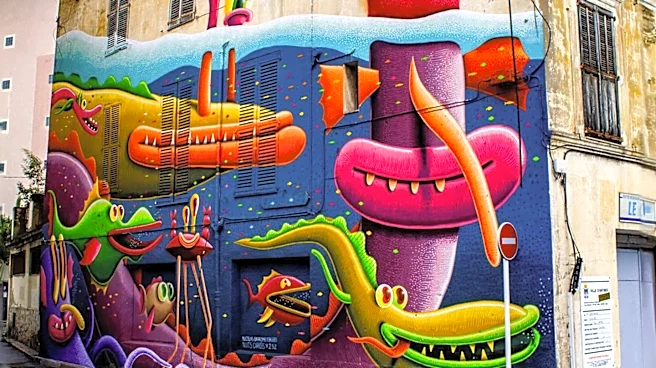
Brazilian twin artists OSGEMEOS, Gustavo and Otávio Pandolfo, have completed a new monumental mural in Lisbon, Portugal. The artwork, located on a towering façade in the Graça neighborhood at Rua da Senhora da Glória 39, was created in collaboration with
Underdogs. This site previously featured a 2017 collaboration between Vhils and Shepard Fairey. OSGEMEOS's mural is characterized by an exuberant, almost cinematic scene featuring two elongated yellow characters, stacked one above the other, adorned in patterned clothing. The piece is rich with intricate details, visual jokes, and miniature narratives, inviting viewers to look closely. Among these details is the name 'Margarida,' a personal reference to the artists' mother, and a miniature landscape within the head of one figure, serving as a portal to 'Tritrez,' their imagined parallel universe. The mural also prominently features musical elements, including a hand hovering over a blue vinyl record, reflecting the artists' deep connection to hip-hop culture.
Why It's Important?
While this specific mural is located in Lisbon, the work of OSGEMEOS holds significant importance within the global art scene, including its influence and presence in the United States. Their unique visual language, deeply rooted in Brazilian culture, hip-hop, and their personal 'Tritrez' universe, has been showcased in major U.S. institutions, such as the Smithsonian's Hirshhorn Museum, which hosted their survey 'OSGEMEOS: Endless Story.' Their art contributes to the broader dialogue on street art's evolution into contemporary fine art, impacting U.S. art markets, urban development, and cultural discourse. The intricate storytelling and vibrant aesthetic of their murals often engage with themes of memory, dreams, and imagination, resonating with diverse audiences and inspiring local artists and communities in the U.S. The presence of such internationally renowned artists helps to elevate the profile of street art and public art initiatives, potentially influencing funding and support for similar projects across American cities.
What's Next?
The completion of OSGEMEOS's new mural in Lisbon will likely further solidify their international reputation and continue to draw attention to their distinctive artistic style. This increased visibility could lead to more commissions and exhibitions in major art centers, including those in the United States. Art enthusiasts and critics will continue to analyze the mural's intricate details and its connection to the artists' broader body of work, particularly their 'Tritrez' universe and their ongoing engagement with hip-hop culture. The mural's location, a site with a history of significant street art, may also become a new landmark for art tourism, potentially inspiring similar urban art initiatives globally. For the U.S. art scene, this continued international recognition of OSGEMEOS could translate into renewed interest in their past and future works, potentially leading to new exhibitions, public art installations, or collaborations with U.S.-based artists and institutions, further enriching the American cultural landscape.
Beyond the Headlines
Beyond its immediate artistic impact, the OSGEMEOS mural in Lisbon offers deeper insights into the evolving nature of public art and its role in urban environments. The artists' use of a towering façade transforms a mundane architectural element into a vibrant cultural statement, challenging traditional notions of art consumption and accessibility. The integration of personal narratives, such as the name 'Margarida' and the 'Tritrez' universe, imbues the public space with intimate meaning, fostering a unique connection between the artwork and its viewers. This approach highlights the potential of public art to not only beautify cities but also to tell stories, preserve memories, and create a sense of community identity. Furthermore, the mural's intricate details and layered meanings encourage prolonged engagement and repeated viewing, promoting a more contemplative interaction with urban spaces. This trend in public art, where personal and cultural narratives are woven into the urban fabric, has significant implications for how cities, including those in the U.S., approach urban planning, cultural development, and community engagement through art.