





What's Happening?
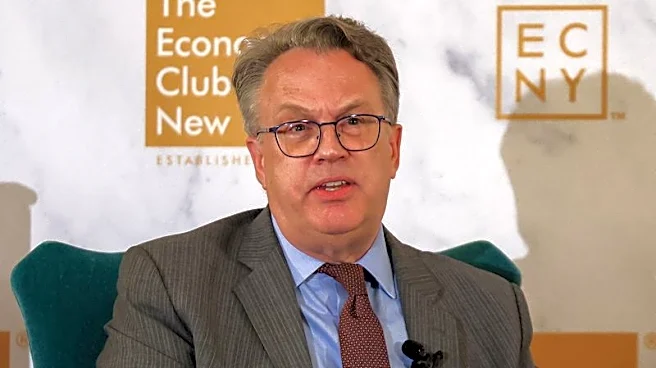
Kansas City Fed President Jeff Schmid recently stated that inflationary pressures remain strong, emphasizing that the Federal Reserve still has work to do to control inflation. Speaking at a financial institutions conference in Hawaii, Schmid highlighted
that the Personal Consumption Expenditures (PCE) headline price index, a key inflation gauge for the Fed, increased by 3.6% year-on-year in September. This figure is considered "uncomfortably" above the Fed's 2% target, indicating that inflation is "moving in the wrong direction." Schmid referenced earlier remarks by Chair Warsh, who in August noted the Fed's ongoing task regarding inflation, and added that the job has become more challenging since then. He also addressed the argument that supply shocks are the primary cause of high inflation, asserting that inflation fundamentally stems from an imbalance between supply and demand, and that strong demand exacerbates price increases during supply disruptions. The Fed, he argued, has the tools and responsibility to manage inflation by influencing demand.
Why It's Important?
The persistent inflation, as highlighted by Kansas City Fed President Schmid, carries significant implications for the U.S. economy and its citizens. A PCE index at 3.6%, well above the 2% target, erodes purchasing power for consumers, making everyday goods and services more expensive. This situation can lead to decreased consumer confidence and spending, potentially slowing economic growth. For businesses, higher inflation means increased costs for raw materials, labor, and operations, which can squeeze profit margins and may be passed on to consumers through higher prices, creating a cycle of inflation. The Federal Reserve's response, particularly regarding interest rates, directly impacts borrowing costs for mortgages, car loans, and business investments. If inflation remains high, the Fed may be compelled to implement further rate hikes, which could cool down the economy but also risk triggering a recession. Schmid's emphasis on demand as a key driver of inflation suggests that the Fed will continue to focus on monetary policy tools to manage aggregate demand, affecting various sectors from housing to manufacturing.
What's Next?
Following President Schmid's remarks, financial markets are closely watching for further signals from the Federal Reserve regarding its monetary policy. The Federal Open Market Committee (FOMC) raised rates in September for the first time since 2023 and held steady in October. However, with inflation remaining elevated, markets have fully priced in a 25 basis point (bp) hike at the upcoming December meeting, and there is a possibility of a 50 bp increase. Additionally, markets are anticipating another potential rate hike in January. The November Consumer Price Index (CPI) report, due on December 10, will be the last major inflation data point before the Fed's December meeting, and its outcome will heavily influence the committee's decision. Future actions by the Fed will depend on incoming economic data, particularly inflation and employment figures, as the central bank aims to bring inflation back to its 2% target while maintaining economic stability. Schmid, who does not hold a vote on the FOMC this year, provides an important perspective on the ongoing challenges.
Beyond the Headlines
The ongoing debate about the causes of inflation, particularly the interplay between supply shocks and demand, has deeper implications for economic policy and public understanding. President Schmid's argument that "inflation is always brought about by an imbalance between supply and demand" challenges the narrative that recent inflation is solely a result of external supply chain disruptions. This perspective suggests that while supply issues can exacerbate price increases, strong aggregate demand plays a crucial role, giving the Federal Reserve a clear mandate to use its tools to manage demand. This understanding could lead to a more proactive and potentially aggressive monetary policy stance, even in the face of global supply challenges. Furthermore, the sustained period of higher inflation could prompt a re-evaluation of the Fed's long-term inflation targeting framework and its communication strategies to better manage public expectations. The impact of tariffs on durable goods prices and AI-related capital investment, as cited by Schmid, also points to structural factors that could contribute to persistent inflation, requiring a broader policy response beyond just monetary tools.