
What's Happening?
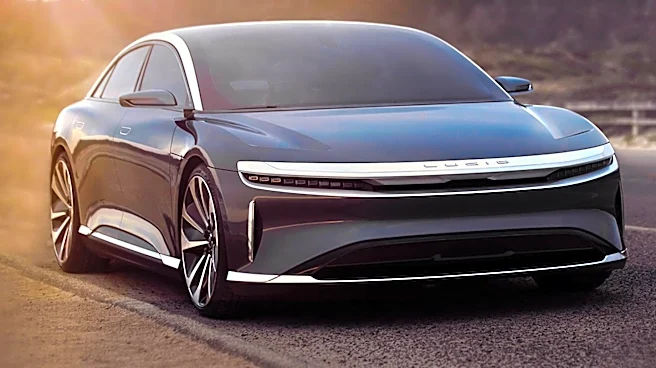
Lucid Motors is at a pivotal moment, implementing a significant operational reset and cost-saving plan while navigating delays in its crucial midsize platform. The company aims to achieve $1.4 billion
in cash reductions for 2026, primarily through inventory optimization ($600-$800 million), reduced capital expenditures ($500 million), and operating expense savings ($200 million). A key component of this reset is the delayed production of its midsize platform, with the first vehicle, the Cosmos SUV, now expected to debut in the second half of 2027. This delay is part of a broader strategy to improve gross margins and expand Lucid's market reach. The Cosmos SUV is projected to be priced under $50,000, targeting a tenfold increase in Lucid's total addressable market. The midsize platform is also intended to support other future models, including the adventure-oriented Earth model and a purpose-built Lunar robotaxi concept. Additionally, Lucid is focusing on its factory in Saudi Arabia, which is transitioning from construction to industrialization, preparing for production test runs of stamping, paint, body, and final assembly systems. This factory is backed by $3.4 billion in financing and incentives over 15 years and has secured large-scale, multiyear government fleet purchase orders.
Why It's Important?
This strategic shift is critical for Lucid Motors' long-term viability and its ability to compete in the rapidly evolving electric vehicle (EV) market. The substantial cost-saving measures are essential to address the company's elevated cash burn and historical shareholder dilution. The success of the midsize platform, despite its delay, is paramount as it represents Lucid's entry into a more accessible price point, which is vital for scaling production and increasing market share beyond its current luxury segment. A successful launch of the Cosmos SUV could significantly broaden Lucid's customer base and improve its financial performance. Furthermore, the development of driverless technology, including the Lunar robotaxi concept and partnerships like the one with Bolt for 25,000 autonomous vehicles, positions Lucid to capitalize on future mobility trends, although regulatory approvals remain a challenge. The Saudi Arabian factory is a significant 'X-factor,' offering stable government orders and substantial financial backing, which could provide a crucial foundation for business stability and contribute to Saudi Arabia's Vision 2030 of building a local EV ecosystem. Failure to execute these initiatives effectively could jeopardize Lucid's future, making these developments closely watched by investors and industry observers.
What's Next?
Lucid Motors will focus on the rigorous execution of its $1.4 billion cash-saving plan throughout 2026, with particular attention to inventory optimization and capital expenditure reductions. The company will continue to prepare its Saudi Arabian factory for full industrialization and production test runs, aiming to leverage the secured government fleet purchase orders. The delayed midsize platform will be a key area of development, with the Cosmos SUV's debut anticipated in the second half of 2027. This will involve refining the vehicle's design and manufacturing processes to achieve the targeted sub-$50,000 price point and improve gross margins. Concurrently, Lucid will advance its driverless technology initiatives, including the Lunar robotaxi concept and its partnership with Bolt, while navigating the complex regulatory landscape for autonomous vehicles. Investors will be closely monitoring Lucid's progress on these four critical projects, seeking tangible evidence of improved financial health and market expansion. The company's ability to demonstrate consistent progress in these areas will be crucial for regaining investor confidence and securing its position in the competitive EV market.
Beyond the Headlines
The challenges faced by Lucid Motors highlight the intense capital requirements and operational complexities inherent in the electric vehicle industry, particularly for newer entrants. The delay of the midsize platform underscores the difficulties in bringing new automotive technologies to market efficiently and cost-effectively. This situation also reflects a broader industry trend where EV manufacturers are increasingly pressured to diversify their product offerings beyond high-end luxury vehicles to achieve mass-market appeal and profitability. The strategic importance of the Saudi Arabian factory extends beyond manufacturing, representing a significant geopolitical and economic partnership that could influence regional EV development and supply chains. Furthermore, Lucid's foray into autonomous vehicle technology, despite regulatory hurdles, signals a long-term vision for integrated mobility solutions, potentially transforming the company from a mere car manufacturer into a broader technology and service provider. The outcome of these initiatives will not only determine Lucid's fate but also offer valuable insights into the evolving dynamics of the global EV landscape, including the balance between innovation, financial discipline, and market penetration.