





What's Happening?
Director Gareth Edwards' 2016 film, 'Rogue One: A Star Wars Story,' is being highlighted for its naturalistic and gritty aesthetic, which resonated with audiences and evoked the feeling of the 1970s 'Star Wars' films. Actress Felicity Jones noted the meticulous
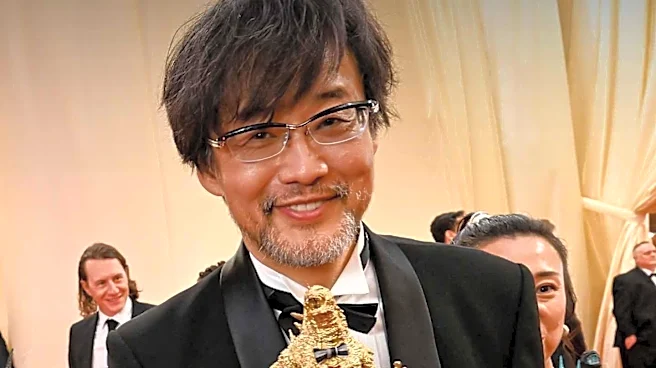
effort, including shooting a specific scene every evening for a week to capture the perfect sunset lighting, contributing to the film's realistic feel. This approach is contrasted with recent Hollywood reboots of the 'Godzilla' franchise, which are described as having devolved into 'unadulterated CGI slop' following Edwards' 2014 installment. Takashi Yamazaki's 'Godzilla Minus One' (2023) is presented as a refreshing alternative to these Hollywood productions, suggesting a preference for more grounded filmmaking over excessive CGI.
Why It's Important?
The discussion around Gareth Edwards' directorial style in 'Rogue One' and its comparison to other major franchises like 'Godzilla' highlights a significant trend in the film industry regarding audience preferences and production approaches. The emphasis on 'naturalism and reality' in 'Rogue One' suggests that viewers often appreciate films that prioritize tangible aesthetics and character-driven narratives, even within large-scale blockbusters. The critique of 'unadulterated CGI slop' in Hollywood's 'Godzilla' reboots indicates a potential fatigue with over-reliance on special effects without a compelling story or grounded visual style. This sentiment could influence future production decisions, encouraging studios to invest in more nuanced filmmaking techniques and less on purely digital spectacle, potentially shifting budgets and creative direction in major U.S. film productions.
What's Next?
The ongoing conversation about the effectiveness of naturalistic filmmaking versus CGI-heavy productions could influence future directorial choices and studio greenlighting processes. Directors like Gareth Edwards, who prioritize a grounded aesthetic, may find increased opportunities for projects that seek to balance spectacle with realism. Conversely, studios might re-evaluate their strategies for large-scale franchises, potentially scaling back on excessive CGI in favor of more practical effects or a more deliberate visual style to avoid audience backlash. This could lead to a shift in how visual effects budgets are allocated and how creative teams are assembled, with a greater emphasis on directors and cinematographers who can achieve a sense of reality within fantastical narratives. The success of films like 'Godzilla Minus One' further demonstrates that audiences are receptive to diverse approaches within established genres.
Beyond the Headlines
The debate over naturalism versus CGI in filmmaking extends beyond mere aesthetic preference; it touches upon the very essence of cinematic storytelling and audience engagement. Films that achieve a sense of 'naturalism and reality,' even in fantastical settings, often foster a deeper emotional connection with viewers, as the world presented feels more tangible and immersive. The critique of 'CGI slop' suggests a broader cultural concern about authenticity and the potential for technology to detract from, rather than enhance, artistic expression. This could lead to a re-evaluation of what constitutes 'quality' in blockbuster cinema, potentially influencing film criticism, academic discourse, and even the training of future filmmakers. The long-term implication is a potential push towards a more balanced integration of technology and traditional filmmaking techniques, ensuring that visual effects serve the story rather than overshadow it.