






What's Happening?
Glencore's shares have experienced a significant 28% decline recently, a development that has occurred despite the company forecasting over $5 billion in earnings from its marketing business alone this year. This downturn is primarily attributed to weakening
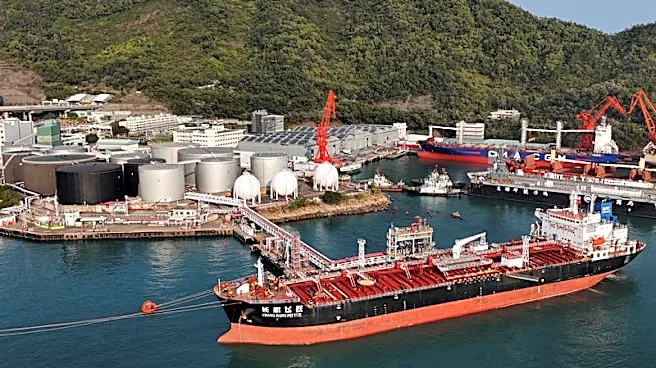
copper prices, which have seemingly spooked investors. However, the company's marketing division, responsible for buying, selling, transporting, storing, and delivering commodities globally, demonstrated exceptional performance in the first half of 2026, with adjusted EBIT soaring 142% to $3.3 billion. This surge was largely driven by disruptions in global energy markets, particularly following the near-cessation of shipments through the Strait of Hormuz. Glencore has also raised its long-term earnings guidance for this business, now expecting through-the-cycle Marketing adjusted EBIT of $2.8 billion to $4.2 billion, up from the previous $2.3 billion to $3.5 billion.
Why It's Important?
The divergence between Glencore's share performance and its robust marketing business highlights a potential misvaluation by the market, which appears to be overly focused on commodity production earnings, particularly copper prices. For U.S. investors and industries, Glencore's marketing division plays a critical role in global commodity supply chains, influencing the availability and pricing of essential raw materials. The division's ability to thrive amidst market disruptions, such as those in the Middle East, underscores its strategic importance in ensuring energy security and access to critical metals and minerals. A stable and efficient global commodity market, facilitated by companies like Glencore, is vital for U.S. manufacturing, energy, and technology sectors, which depend on these resources. The market's oversight of this resilient profit machine could present opportunities for investors who recognize the long-term structural advantages of Glencore's trading capabilities.
What's Next?
Glencore will continue to focus on its dual strategy of commodity production and marketing. The company's management believes its readily marketable inventories have grown substantially, reflecting higher commodity prices, inflation, and increased business volumes, which supports the raised long-term earnings guidance for its marketing division. As global energy markets and supply chains remain volatile, the marketing business is expected to continue capitalizing on trading opportunities, market dislocations, and logistical arbitrage. Investors will be closely watching whether the market eventually recognizes the full value of Glencore's diversified operations, particularly the resilience and profitability of its marketing arm, potentially leading to a re-evaluation of its share price. The company also plans to return billions to shareholders through dividends and buybacks.
Beyond the Headlines
The situation with Glencore's shares and its marketing business points to a deeper structural shift in the global economy, where geopolitical events and supply chain vulnerabilities are becoming more frequent and impactful. The increased focus by governments on energy security and securing access to critical raw materials creates lasting opportunities for companies with extensive global trading relationships, infrastructure, and logistical capabilities like Glencore. This trend suggests that the value of sophisticated commodity trading and logistics operations may be underestimated in traditional market analyses that primarily focus on production volumes and prices. The ability to navigate and profit from market disruptions could become an increasingly important differentiator for natural resource companies, highlighting the strategic value of their marketing divisions beyond mere commodity extraction.