





What's Happening?
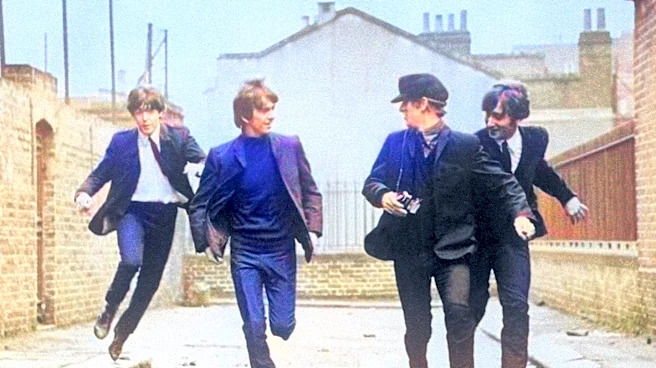
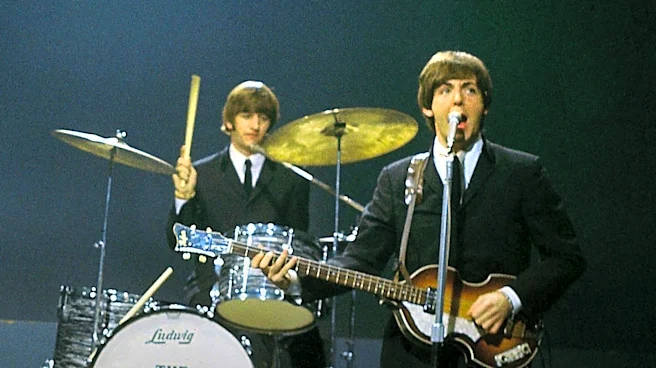
Sony Pictures is exploring novel release strategies for director Sam Mendes' upcoming project, 'The Beatles — A Four-Film Cinematic Event,' slated for April 2028. The studio is contemplating releasing all four films on the same day and, more unusually,
combining their box office returns. This approach aims to prevent any single Beatles biopic from being perceived as more successful than the others. According to sources for The Hollywood Reporter, the studio and Mendes have discussed marketing the films without a specific viewing order, suggesting there will be no 'right' sequence to watch them. Additionally, Sony may offer a four-pack of tickets for the entire series, which would require collaboration with theater chains to implement. The cast for the films includes Harris Dickinson as John Lennon, Paul Mescal as Paul McCartney, Joseph Quinn as George Harrison, and Barry Keoghan as Ringo Starr, alongside other notable actors portraying key figures in The Beatles' story.
Why It's Important?
This unconventional release strategy by Sony Pictures could significantly impact the film industry's traditional metrics for success and audience engagement. By potentially lumping together the box office totals of four distinct films, Sony is challenging the standard practice of individual film performance evaluation. This move could set a precedent for future multi-part cinematic events, particularly those based on widely beloved intellectual properties where individual character popularity might skew perceptions of success. The decision to market the films without a prescribed viewing order also represents a departure from typical serialized storytelling, offering audiences greater flexibility but potentially altering narrative reception. For moviegoers, a four-pack ticket option could enhance the viewing experience by encouraging engagement with the entire series, while for theater chains, it presents a new operational challenge in ticketing and sales. The success or failure of this strategy could influence how studios approach the release and financial reporting of extensive film franchises in the future.
What's Next?
Sony Pictures and Sam Mendes will continue to refine the release and box office strategy for 'The Beatles — A Four-Film Cinematic Event' as the April 2028 release date approaches. Further discussions with theater chains will be necessary to iron out the logistics of selling four-pack tickets and managing combined box office reporting. The studio will also need to develop a comprehensive marketing campaign that effectively communicates the unique viewing experience to audiences, emphasizing the lack of a specific order and the collective nature of the cinematic event. Industry observers will be closely watching how this strategy unfolds, as its outcome could influence future decisions regarding multi-film projects. The performance of these films, both individually and as a collective, will provide valuable insights into audience preferences for serialized content and the viability of alternative box office reporting methods.
Beyond the Headlines
The proposed strategy by Sony Pictures delves into deeper implications regarding the commodification of cultural icons and the evolving nature of cinematic storytelling. By attempting to equalize the perceived success of each Beatle's story, Sony is navigating the complex legacy of a band where individual members often garnered differing levels of public adoration. This approach could be seen as an effort to preserve the collective identity of The Beatles, rather than allowing individual narratives to overshadow the group's overall impact. Ethically, it raises questions about how creative works are valued and presented to the public, moving beyond a simple profit-driven model to one that considers cultural preservation and fan experience. The decision to forgo a specific viewing order also reflects a modern trend in media consumption, where audiences often prefer non-linear engagement with content. This could signal a shift towards more flexible and audience-centric storytelling models in mainstream cinema, potentially influencing how historical or biographical narratives are adapted for the screen.