




What's Happening?
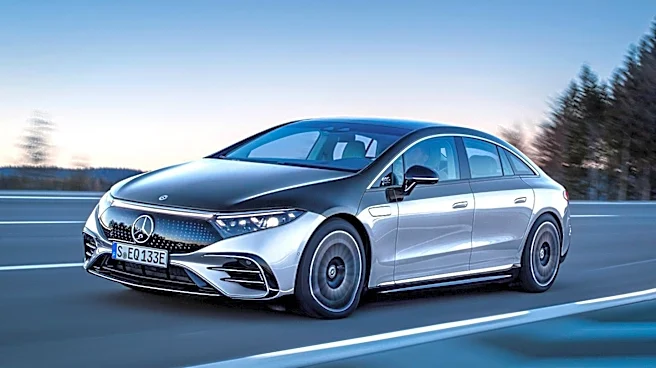
Mercedes-Benz has unveiled its latest GLE SUV at the Chengdu Motor Show, featuring an assisted-driving system developed in collaboration with Chinese autonomous driving technology provider Momenta. This partnership highlights a growing trend where foreign
automakers are integrating advanced technologies from Chinese smart-driving firms. The new long-wheelbase GLE is also slated to incorporate Momenta's R7 World Model, an AI engine designed for self-improvement. Mercedes-Benz initially invested in Momenta in 2017, and their cooperation has expanded significantly since then. This collaboration is part of a broader shift in the automotive industry, where software and artificial intelligence are becoming increasingly crucial, leading to foreign automakers seeking partnerships with Chinese tech companies to leverage their expertise in the rapidly evolving Chinese market.
Why It's Important?
This collaboration between Mercedes-Benz and Momenta is highly significant for the U.S. automotive industry as it demonstrates a global shift in how advanced automotive technology is developed and integrated. Traditionally, foreign automakers introduced overseas-developed models and technologies into China. However, the increasing importance of software and AI in modern vehicles, coupled with China's rapid advancements in smart-driving technology, is reversing this trend. U.S. automakers, like their European counterparts, may increasingly look to Chinese tech firms for partnerships to accelerate their own development in autonomous driving and AI. This could lead to a more interconnected global automotive supply chain, potentially influencing U.S. regulatory frameworks for autonomous vehicles and data governance. The success of such collaborations could also impact the competitive landscape, pushing U.S. tech companies to innovate faster in the automotive AI space or risk being outpaced by international partnerships.
What's Next?
The partnership between Mercedes-Benz and Momenta is expected to deepen, with the new long-wheelbase GLE adopting Momenta's R7 World Model, a self-improving physical artificial intelligence engine. Momenta is also pursuing global expansion, aiming to deliver cross-border vehicle programs with other foreign partners, including General Motors, Toyota, and Hyundai. This indicates a future where Chinese-developed autonomous driving technologies could become more prevalent in vehicles sold globally, including the U.S. However, challenges remain, such as differing traffic codes, data-governance requirements, and safety standards across markets, which will necessitate further verification and adaptation of these systems. The long-term success of these collaborations will depend on navigating these regulatory and technical complexities, and whether they translate into sustained roles within global vehicle programs.
Beyond the Headlines
The collaboration between Mercedes-Benz and Momenta signifies a profound shift in the global automotive landscape, moving beyond traditional manufacturing partnerships to deep technological integration. This trend raises critical questions about intellectual property, data sovereignty, and the ethical implications of AI development in autonomous vehicles. As Chinese firms like Momenta gain global traction, there could be increased scrutiny from U.S. policymakers regarding the security and privacy of data collected by these advanced systems. Furthermore, the reliance on AI engines that 'self-improve' introduces new challenges in accountability and transparency, particularly in the event of accidents or system failures. This evolving dynamic could reshape international standards for autonomous driving technology and foster a more collaborative yet competitive environment for innovation.