





What's Happening?
Oil prices remained relatively stable on Friday as the United States approached a long holiday weekend, with traders cautiously optimistic about ongoing peace efforts between the US and Iran. Brent crude futures saw a slight increase of 7 cents, reaching
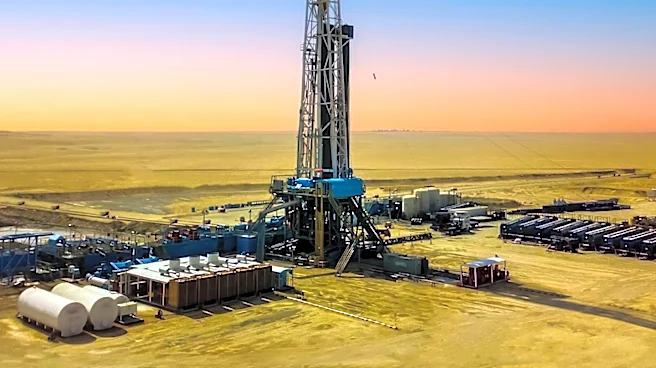
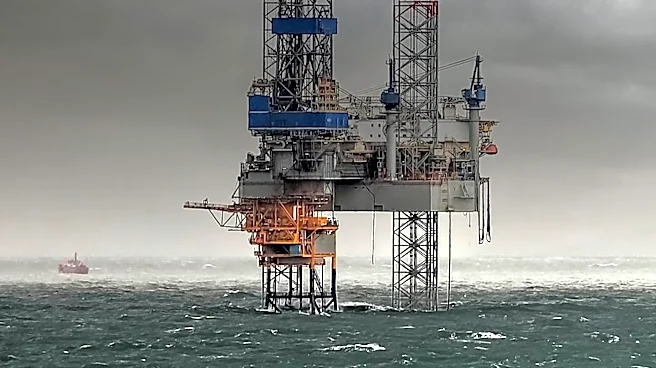
$71.87 per barrel, while West Texas Intermediate (WTI) experienced a minor decrease of 6 cents, settling at $68.63 per barrel. This stability comes after both benchmarks hit their lowest levels since the onset of the US-Israeli conflict with Iran in late February. The market's guarded optimism is fueled by the resumption of some shipping through the Strait of Hormuz, following an initial agreement between Iran and the US. Despite recent exchanges of strikes between the two nations, Gulf producers are ramping up oil output, with Kuwait notably increasing its production to 1.65 million barrels per day in June.
Why It's Important?
The stability in oil prices amid peace efforts between the US and Iran holds significant implications for global energy markets. The resumption of shipping through the Strait of Hormuz, a critical chokepoint for global oil supply, suggests a potential easing of geopolitical tensions that have previously threatened supply disruptions. Increased oil production from Gulf countries, coupled with strategic petroleum reserve releases, could lead to a more balanced market, reducing the risk of future shortages. This development is crucial for energy-dependent economies and industries, as it may stabilize fuel costs and support economic growth. However, the market remains cautious, as the situation is fluid and contingent on the durability of peace efforts.
What's Next?
The next steps involve closely monitoring the implementation of the peace agreement between the US and Iran, particularly regarding the security of shipping routes and the potential for further military escalations. Gulf producers are likely to continue adjusting their output in response to market conditions, while traders will watch for any shifts in the market structure, such as the transition from backwardation to contango. The US Strategic Petroleum Reserve releases will also play a role in influencing near-term supply dynamics. Stakeholders, including governments and energy companies, will need to remain vigilant and adaptable to the evolving geopolitical landscape.