






What's Happening?
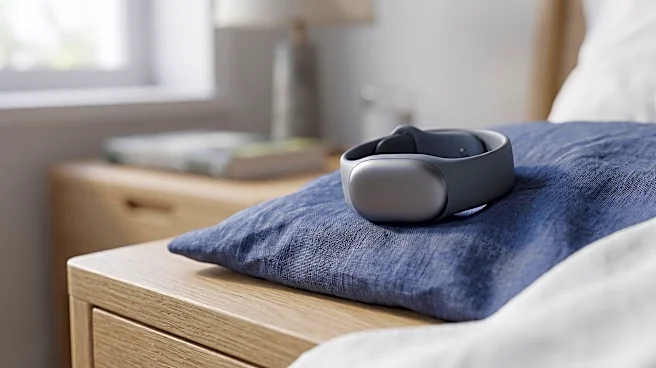
The Fitbit Air, a screenless fitness tracker, is receiving positive feedback for its comfort and advanced sleep tracking capabilities. Users appreciate its lightweight design, weighing only 12g with the band, which makes it comfortable for continuous
wear, including overnight. This allows for accurate sleep monitoring, including the detection of short naps and precise estimation of time taken to fall asleep. The device also offers a Smart Alarm feature that vibrates on the wrist to wake users at an optimal point in their sleep cycle. However, the Fitbit Air lacks built-in GPS, relying on a connected smartphone for location data. This limitation can lead to discrepancies in distance tracking during outdoor activities and treadmill workouts, with some users reporting it consistently records less distance compared to GPS-enabled smartwatches or treadmill readouts. The device's accuracy in step counting can also vary, occasionally adding extra steps, though this is not considered substantial enough to render daily counts unusable.
Why It's Important?
The Fitbit Air's focus on comfort and comprehensive sleep tracking addresses a significant user need in the wearable market, particularly for individuals who find traditional smartwatches too bulky or uncomfortable for continuous wear. Its ability to accurately monitor sleep and recovery metrics, such as Heart Rate Variability (HRV) and Readiness scores, provides valuable insights for fitness enthusiasts and gym-goers looking to optimize their training and recovery. The screenless design also appeals to those who prefer a less intrusive wearable experience, reducing screen time and notification distractions. However, the reliance on a connected smartphone for GPS and potential inaccuracies in distance tracking highlight a trade-off. This could deter outdoor athletes, hikers, and runners who depend on precise GPS data for their activities, potentially limiting its market appeal among a segment of fitness consumers. The device's performance underscores the ongoing challenge for wearable manufacturers to balance comfort, comprehensive health monitoring, and accurate activity tracking without compromising user experience or data reliability.
What's Next?
Future iterations of the Fitbit Air or similar screenless trackers may need to address the GPS accuracy limitations to broaden their appeal to a wider range of fitness users. This could involve exploring more advanced algorithms for stride length and step-based distance estimation or integrating a low-power, compact GPS module without significantly increasing the device's size or weight. Additionally, improving the consistency of sleep tracking to prevent missed data, as reported by some users, will be crucial for enhancing user trust and satisfaction. The integration with Google Health is central to the user experience, and continued development of this platform, including features like the Health Coach and improved widget functionality for iOS users, will be important for maximizing the utility of the Fitbit Air's collected data. As the wearable market continues to evolve, the balance between minimalist design and comprehensive, accurate functionality will remain a key area of innovation.
Beyond the Headlines
The emergence of screenless fitness trackers like the Fitbit Air signifies a broader trend in wearable technology towards more discreet and integrated health monitoring. This shift moves beyond the 'smartwatch as a mini-smartphone' paradigm, focusing instead on continuous, unobtrusive data collection for health and wellness. The emphasis on sleep and recovery metrics, rather than just activity tracking, reflects a growing understanding of holistic health and the importance of rest in overall well-being. This approach could lead to a future where wearables are less about notifications and more about providing actionable health insights seamlessly integrated into daily life. The challenges in GPS accuracy also highlight the ongoing tension between miniaturization and advanced functionality, pushing manufacturers to innovate in sensor technology and data processing to deliver reliable performance in increasingly compact form factors. This trend could also influence the design of other personal health devices, prioritizing comfort and continuous monitoring over screen-based interaction.