





What's Happening?
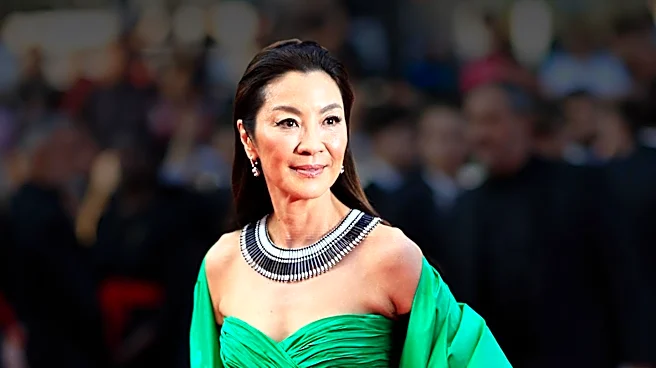
Michelle Yeoh, the Oscar-winning actress known for 'Everything Everywhere All at Once,' encountered significant challenges in Hollywood early in her career, particularly after her role in the James Bond film 'Tomorrow Never Dies' (1997). Despite her established
stardom in Hong Kong martial arts cinema, Yeoh struggled to find work in the Western film industry. According to an interview with People in 2023, industry professionals often could not differentiate her ethnicity, questioning whether she was Chinese, Japanese, or Korean, and even doubted her English proficiency, speaking to her loudly and slowly. Yeoh noted that the 'Bond girl' label at the time was heavily associated with objectification, and while her character, Chinese spy Wai Lin, was groundbreaking for its equality with James Bond, it did not immediately translate into diverse job offers. She spent two years without work because she refused to conform to the stereotypical roles presented to her, a situation that only began to change with her role in 'Crouching Tiger, Hidden Dragon' (2000).
Why It's Important?
This experience highlights the historical and ongoing issues of racial stereotyping and limited opportunities for Asian actors in Hollywood. Yeoh's struggle, despite her talent and prior success in Asian cinema, underscores the systemic biases that have long affected non-white performers. Her account reveals how the industry's inability to see beyond narrow ethnic classifications and its reliance on stereotypes hindered her career progression. This situation is significant because it reflects broader industry practices that have historically marginalized diverse talent, limiting representation and perpetuating narrow portrayals of non-Western cultures. Her eventual success, particularly with 'Crouching Tiger, Hidden Dragon' and later her Oscar win, demonstrates a gradual shift, but also serves as a reminder of the persistent barriers that actors from diverse backgrounds have had to overcome to achieve recognition and meaningful roles in mainstream American cinema.
What's Next?
While Michelle Yeoh has achieved significant success and critical acclaim, including an Academy Award, her early career struggles continue to resonate within ongoing discussions about diversity and inclusion in Hollywood. The industry is under increasing pressure to address systemic biases and create more equitable opportunities for actors of all backgrounds. Moving forward, Yeoh's story may serve as a powerful case study for advocacy groups and industry leaders pushing for greater representation and authentic storytelling. The continued success of diverse films and actors could further encourage studios to invest in a wider range of narratives and talent, potentially leading to more nuanced roles for Asian performers and a broader dismantling of ethnic stereotypes. However, sustained effort will be required to ensure these changes are permanent and pervasive across all levels of film and television production.
Beyond the Headlines
Michelle Yeoh's experience extends beyond individual career challenges to touch upon deeper cultural and ethical implications within the entertainment industry. Her struggle to be seen as more than her ethnicity reflects a broader issue of how Hollywood has historically viewed and marketed non-white actors, often reducing them to caricatures or exoticized figures. This not only limits artistic expression but also impacts how diverse communities are perceived by global audiences. The industry's initial inability to recognize her versatility and talent, instead focusing on her perceived 'otherness,' speaks to a lack of cultural competency and imagination. Her eventual breakthrough with 'Crouching Tiger, Hidden Dragon,' a foreign production that achieved massive success in the West, demonstrated that audiences were receptive to diverse stories and complex characters, challenging Hollywood's preconceived notions about marketability and appeal. This narrative underscores the ethical responsibility of media to reflect the diversity of the world accurately and inclusively.