




What's Happening?
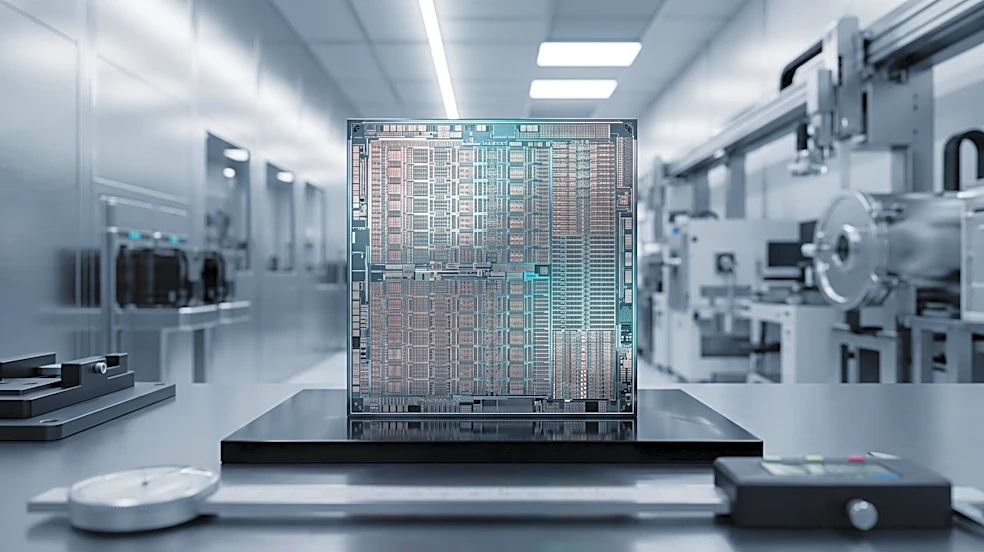
NVIDIA's Vera team has revealed insights into their new Vera CPU, designed specifically for agentic AI workloads. Unlike competitors who utilize multi-chiplet architectures, NVIDIA has opted for a single monolithic die for Vera. This design choice aims
to eliminate the internal performance 'tax' that occurs when data crosses boundaries between separate chiplets, thereby maximizing single-threaded performance and data movement. The Vera CPU is positioned as a specialized conductor for managing the complex, multi-step reasoning loops of AI agents, shifting the CPU's role from a general-purpose multitasker. This approach is a direct response to the demands of agentic AI, which requires rapid, continuous loops between the CPU and GPU, necessitating high per-core speed, massive memory bandwidth, and minimal latency to keep expensive GPUs highly utilized. The Vera CPU achieves 1.5x faster performance than its predecessor, Grace, and up to 2x faster on agentic workloads compared to leading x86 processors.
Why It's Important?
NVIDIA's strategic decision to prioritize a monolithic die for its Vera CPU marks a significant departure from current industry trends and has profound implications for the future of AI infrastructure. By focusing on high single-threaded performance and low latency, Vera addresses a critical bottleneck in agentic AI, where the CPU's efficiency directly impacts the utilization of high-cost GPUs. This could lead to more efficient and powerful AI systems, accelerating advancements in areas like reinforcement learning and complex AI agent operations. The move also highlights NVIDIA's intent to carve out a distinct niche in the CPU market, unencumbered by the need to serve diverse segments like client PCs and traditional data centers. This specialization could give NVIDIA a competitive edge in the rapidly expanding AI sector, potentially influencing other chip manufacturers to re-evaluate their architectural strategies for AI-specific applications. The emphasis on a custom LPDDR5X memory subsystem and a second-generation Scalable Coherent Fabric further underscores the commitment to optimizing every aspect of the CPU for AI workloads.
What's Next?
The Vera CPU is being commercialized as an independent, standalone asset, with NVIDIA anticipating the deployment of 'pure racks' of Vera processors dedicated to crunching massive volumes of agent tool calls and reasoning loops. This suggests a future where AI data centers might feature specialized CPU racks alongside GPU clusters, optimizing resource allocation for different stages of AI processing. While NVIDIA does not officially endorse specific CPU-to-GPU ratios, the team believes the ratio is shifting towards CPUs due to the massive volume of agent tool calls. This shift could drive increased demand for standalone CPU solutions like Vera. NVIDIA also maintains a pragmatic stance on future chiplet designs, indicating a willingness to adapt its architecture if market opportunities dictate. This flexibility suggests a continuous evolution of their CPU strategy, driven by the dynamic needs of the AI landscape. The industry will be watching closely to see how Vera's performance translates into real-world AI applications and how competitors respond to this specialized approach.
Beyond the Headlines
The design philosophy behind NVIDIA's Vera CPU, particularly its rejection of multi-chiplet designs in favor of a monolithic die for agentic AI, reflects a deeper understanding of the unique computational demands of advanced AI. This move challenges the prevailing wisdom in chip design, which has largely favored modularity and scalability through chiplets. By prioritizing the elimination of internal latency and maximizing per-core performance, NVIDIA is implicitly arguing that for certain highly interactive and sequential AI tasks, the benefits of a tightly integrated, high-speed core outweigh the advantages of distributed processing. This could lead to a re-evaluation of architectural trade-offs in the broader semiconductor industry, especially as AI workloads become more sophisticated. Furthermore, the concept of 'pure racks' of CPUs for agentic AI suggests a future where data centers are not just heterogeneous in terms of CPU and GPU, but also in the specialized roles these processors play, leading to more finely tuned and efficient computing environments for AI development and deployment.