


What's Happening?
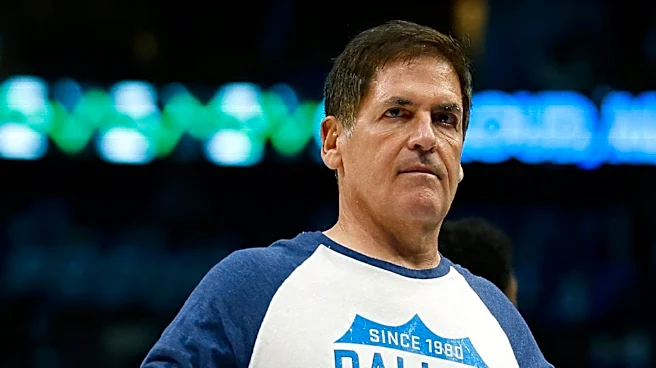
Former Mavericks majority owner Mark Cuban has publicly supported Carlie Irsay-Gordon, the principal owner and CEO of the Indianapolis Colts, regarding her frequent presence on the sidelines during NFL games. Irsay-Gordon has faced criticism for her sideline routine,
which often involves her wearing a headset and taking notes. Cuban, who was known for his own frequent appearances behind the bench during his tenure with the Mavericks, stated on X that he sat behind the bench to learn, observe interactions, develop relationships, and gather information to make better decisions. He emphasized that being on the court level provided more valuable insights than being in a VIP box. Irsay-Gordon has explained her routine as a way to educate herself on the team's in-game football operations and to be a more effective leader by listening and understanding. She became the Colts' principal owner and CEO in June 2025.
Why It's Important?
This situation highlights differing philosophies on sports team ownership and leadership engagement. Cuban's defense of Irsay-Gordon underscores a belief that hands-on involvement and direct observation can lead to more informed decision-making, fostering better relationships with players and staff. This approach contrasts with a more traditional, detached ownership style often seen in sports. For the Colts, Irsay-Gordon's method, supported by Cuban, suggests a commitment to understanding the intricacies of the game from the ground level, which could potentially influence team strategy and morale. The public debate also brings attention to the scrutiny female owners in professional sports may face, as Cuban noted he received less criticism for similar behavior. This discussion could influence how other team owners, particularly new ones, choose to engage with their organizations.
What's Next?
Carlie Irsay-Gordon is expected to continue her sideline routine, as she has expressed her commitment to this method of learning and leadership. The ongoing performance of the Colts, particularly after recent team changes and player decisions, may continue to fuel public discussion around her leadership style. If the team's performance improves, her hands-on approach might be viewed more favorably, potentially encouraging other owners to adopt similar strategies. Conversely, continued struggles could intensify criticism, regardless of Cuban's support. The broader conversation about owner involvement in day-to-day team operations, especially on the sidelines, is likely to persist within sports media and among fans, potentially influencing future expectations for team leadership.
Beyond the Headlines
The debate surrounding Carlie Irsay-Gordon's sideline presence touches upon deeper themes of leadership, gender roles in professional sports, and the evolving nature of team ownership. Cuban's endorsement challenges conventional notions of how owners should operate, suggesting that active, visible engagement can be a strength rather than a distraction. This could pave the way for more diverse leadership styles in sports, moving away from purely boardroom-based decision-making. Furthermore, the differing public reactions to Irsay-Gordon and Cuban's similar behaviors raise questions about implicit biases and expectations placed on female leaders in male-dominated industries. The situation also underscores the constant pressure on sports owners to justify their methods, especially when a team is underperforming, highlighting the intense public scrutiny inherent in professional sports ownership.