






What's Happening?
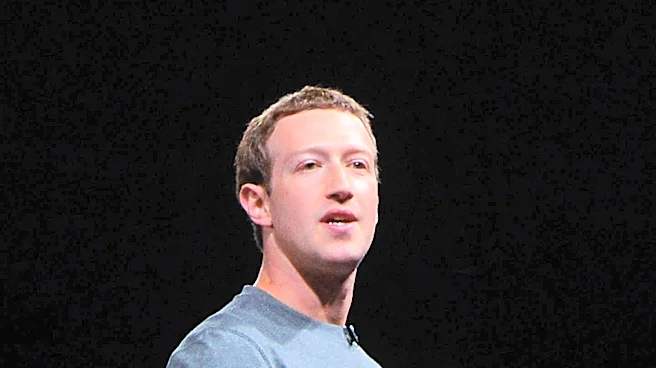
Meta founder Mark Zuckerberg recently released a manifesto titled 'The Future is for Everyone,' outlining a utopian vision for an AI-driven future. The document promises that AI will provide personal agents to enhance various aspects of life, freeing
up time for personal pursuits. However, during a company meeting, Meta's CTO Andrew Bosworth contradicted this vision by dismissing the idea that AI-driven productivity gains would allow employees more time off. Bosworth's comments highlight a disconnect between the optimistic public narrative and internal realities, as employees face increased pressure to utilize AI for enhanced productivity.
Why It's Important?
This development underscores the growing tension between the promises of AI technology and its real-world implications for workers. While AI is often touted as a tool for personal empowerment and efficiency, the reality for many employees is increased workload and stress. This contradiction could impact employee morale and retention at Meta, as well as influence public perception of AI's role in the workplace. The situation also raises broader questions about the ethical use of AI in business and the balance between technological advancement and employee well-being.
What's Next?
Meta may need to address these internal contradictions to maintain employee trust and morale. This could involve clearer communication about AI's role in the company and potential adjustments to work policies to align with the promised benefits of AI. Additionally, the tech industry as a whole may face increased scrutiny regarding the implementation of AI technologies and their impact on workers. Stakeholders, including employees, investors, and regulators, will likely continue to monitor Meta's approach to AI and its implications for the future of work.