






What's Happening?
Estate planning requires a clear understanding of the differences between qualified and nonqualified accounts, as these distinctions significantly impact how assets are transferred, taxed, and managed within a trust. Qualified accounts, such as 401(k)s
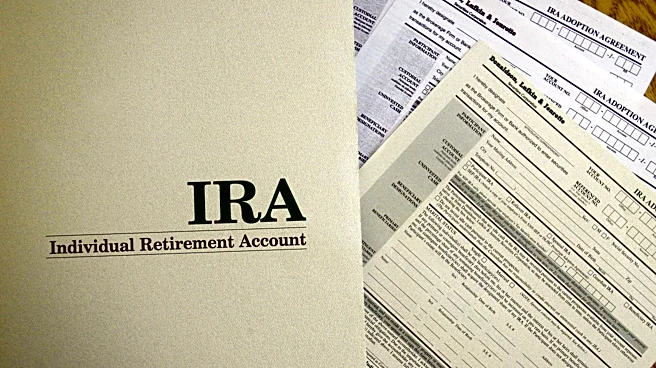
and IRAs, are tax-advantaged retirement accounts governed by federal tax rules. These accounts cannot typically be titled in a living trust during the owner's lifetime and pass via beneficiary designation forms, which often override wills or trusts. The SECURE Act mandates that most non-spouse beneficiaries must empty inherited retirement accounts within 10 years, with specific rules for annual minimum distributions. Nonqualified accounts, including bank accounts and taxable brokerage accounts, are generally more flexible. They can usually be retitled into a living trust or pass via payable-on-death/transfer-on-death designations, avoiding probate. These accounts also benefit from a step-up in basis at death, which can reduce capital gains taxes for heirs.
Why It's Important?
Mismanaging qualified and nonqualified accounts in estate planning can lead to significant financial consequences, including accelerated taxes and unintended distribution outcomes. For qualified accounts, incorrect beneficiary designations can result in substantial tax liabilities for heirs, especially with the 10-year payout rule for most non-spouse beneficiaries. Trusts named as beneficiaries for qualified accounts must be specifically drafted as 'see-through' trusts (conduit or accumulation) to manage distributions effectively and potentially mitigate tax burdens. For nonqualified accounts, proper titling within a living trust ensures assets avoid probate and are managed according to the grantor's instructions, while the step-up in basis can provide considerable tax savings on appreciated investments. Understanding these differences is crucial for optimizing wealth transfer, minimizing taxes, and ensuring assets are distributed according to the estate owner's wishes, protecting beneficiaries from unnecessary financial complications.
What's Next?
Individuals engaged in estate planning should conduct a comprehensive review of all their financial accounts to correctly classify them as qualified or nonqualified. It is essential to audit all beneficiary designation forms for retirement accounts, annuities, and life insurance policies to ensure they align with the overall estate plan. For nonqualified accounts, verifying that they are properly titled in a living trust or have appropriate transfer-on-death designations is critical. Consulting with an estate planning attorney and a tax professional is highly recommended to ensure trusts are correctly drafted, especially for receiving retirement accounts, and to explore strategies like Roth conversions or matching assets to beneficiaries based on their tax situations. Regular reviews of the estate plan are necessary to adapt to changes in tax laws, personal circumstances, and financial goals.
Beyond the Headlines
The intricate rules governing qualified and nonqualified accounts highlight the broader complexities of wealth transfer in the U.S. legal and tax system. The distinction reflects a policy balance between encouraging retirement savings through tax incentives (qualified accounts) and allowing flexibility for general wealth management (nonqualified accounts). The evolution of legislation, such as the SECURE Act, continually reshapes how inherited wealth is treated, impacting long-term financial planning for families. Ethically, the responsibility falls on individuals to proactively plan to ensure their legacy is managed efficiently and equitably, avoiding potential pitfalls that could diminish their beneficiaries' inheritance. The legal framework surrounding these accounts also underscores the importance of specialized legal advice, as generic estate planning approaches can lead to significant and costly errors, emphasizing the need for tailored solutions in a complex financial landscape.