




What's Happening?
Composting at home provides a cost-free method to transform organic waste into valuable soil amendment, reducing landfill contributions and enhancing garden health. This process involves balancing nitrogen-rich 'green' materials, such as kitchen scraps
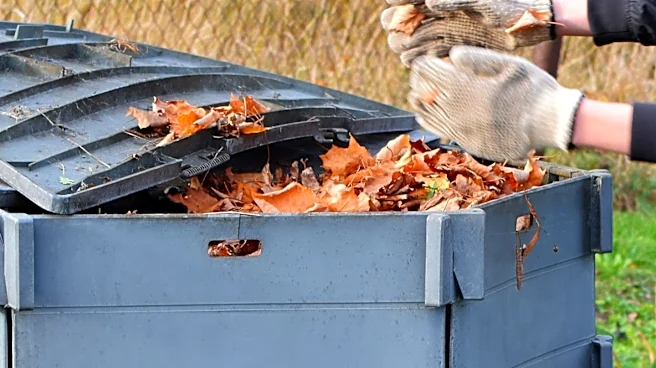
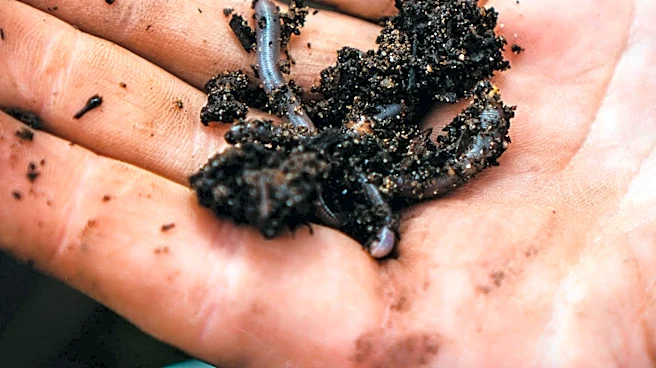
and fresh grass clippings, with carbon-rich 'brown' materials like fallen leaves, garden trimmings, and cardboard. The ideal compost pile maintains a roughly 50/50 mix of these materials by volume, ensuring proper decomposition. While commercial activators and bins are available, they are not essential, as composting relies on natural biological processes driven by microorganisms, moisture, and oxygen. Simple structures like pallet bays or chicken wire cylinders can contain the compost, or a basic open pile can suffice, especially in dry climates. Covering the pile helps retain heat and protect against excessive rain.
Why It's Important?
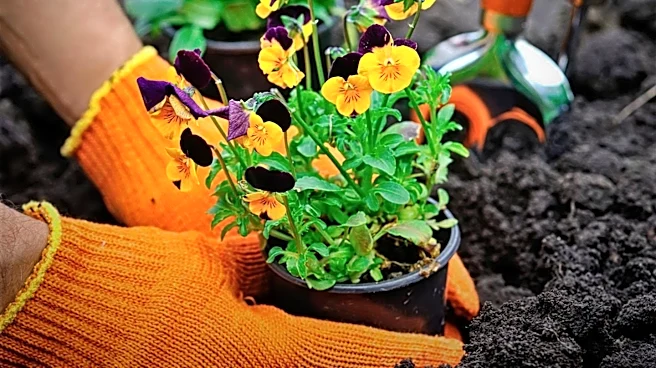
The practice of home composting is significant for its environmental and economic benefits. By diverting organic waste from landfills, it reduces methane emissions, a potent greenhouse gas, and lessens the burden on waste management systems. Economically, it eliminates the need to purchase commercial soil amendments and fertilizers, offering a sustainable and free source of fertility for gardens. This self-sufficiency in soil enrichment can be particularly valuable for home gardeners, allowing them to improve soil structure, water retention, and nutrient availability without additional cost. The ability to create compost from household and garden waste means that this resource is continuously renewable, providing a long-term solution for soil health and waste reduction.
What's Next?
Individuals interested in starting home composting can begin by collecting kitchen scraps, garden trimmings, and cardboard. The next step involves creating a compost pile or using a simple container, ensuring a balanced mix of 'green' and 'brown' materials. Regular turning of the pile is recommended to aerate it and speed up decomposition. Maintaining appropriate moisture levels is also crucial; the pile should be damp but not waterlogged. Over time, this process will yield nutrient-rich compost ready for use in gardens, improving soil quality for future planting seasons. For those in specific climate zones, adjusting moisture management and insulation based on local conditions will optimize the composting process.
Beyond the Headlines
Beyond its immediate benefits, home composting fosters a deeper connection to ecological cycles and promotes a more sustainable lifestyle. It encourages individuals to view organic waste not as trash, but as a valuable resource that can be regenerated. This practice can lead to a greater understanding of soil biology and the importance of nutrient cycling in maintaining healthy ecosystems. Ethically, it aligns with principles of waste reduction and environmental stewardship, empowering individuals to take direct action against climate change and resource depletion. Culturally, it can revive traditional practices of resourcefulness and self-sufficiency, contributing to a more resilient and environmentally conscious community.