


What's Happening?
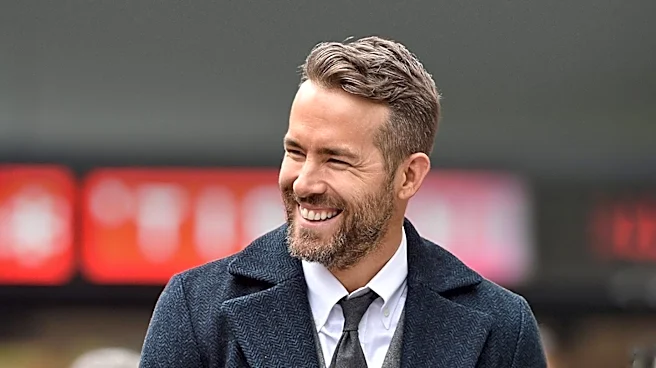
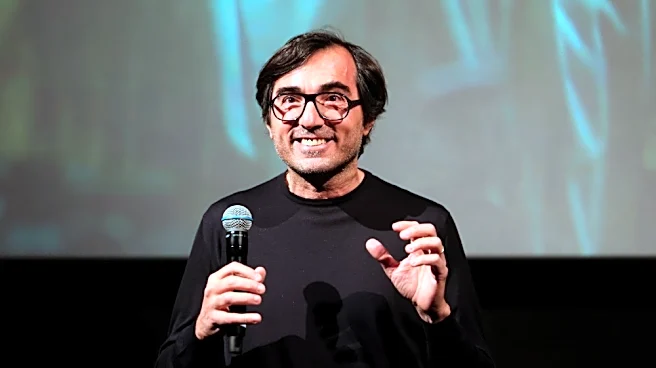
Actor, producer, and entrepreneur Ryan Reynolds spoke at the inaugural Livability and Investment Exhibition (LIVEX) in Abu Dhabi, addressing his views on perfectionism and creativity. During a session titled 'Growth with Soul,' Reynolds described perfectionism as
'one of the worst diseases in modern culture.' He attributed his creative instincts to his childhood anxiety, explaining that constantly anticipating threats and inventing storylines was a form of creativity. Reynolds, the youngest of four boys, recounted growing up in a 'tough house' and constantly trying to predict his father's reactions. He emphasized that he doesn't consider himself a 'pure actor' but rather a storyteller, often observing the entire production process on set rather than focusing solely on his performance. He also shared his approach to writing, where he often starts with a 'bad version' to encourage collaboration and improvement.
Why It's Important?
Ryan Reynolds' insights into perfectionism and creativity offer a unique perspective from a prominent figure in the entertainment industry, resonating with broader discussions about mental health and professional development. His candid admission about anxiety fueling his creative process challenges the often-glamorized image of success, highlighting the internal struggles that can drive innovation. This perspective is particularly relevant in high-pressure fields like entertainment, where the pursuit of perfection can be debilitating. By advocating for 'abandoning' projects rather than endlessly perfecting them, Reynolds provides a practical approach to overcoming creative blocks and fostering productivity. His emphasis on storytelling over 'pure acting' also sheds light on the evolving roles within the film industry, where multi-hyphenate talents like Reynolds are increasingly involved in various aspects of production, from writing to business strategy.
What's Next?
Reynolds' public discussion of these topics at an international exhibition suggests a growing trend among public figures to openly address mental health and the realities of creative work. This could encourage more open conversations within the entertainment industry and beyond, potentially leading to greater support systems for artists and professionals grappling with similar challenges. His philosophy of embracing imperfection and viewing anxiety as a creative tool may influence how aspiring creators approach their craft, fostering a more resilient and experimental mindset. Furthermore, Reynolds' continued involvement in various aspects of film production, from acting to producing and writing, indicates a future where creative professionals are increasingly empowered to shape their projects holistically. His participation in events like LIVEX also highlights the intersection of entertainment, business, and broader societal discussions on well-being and innovation.
Beyond the Headlines
Reynolds' reflections on perfectionism and anxiety touch upon deeper societal pressures to achieve flawless outcomes, particularly in an age dominated by social media and curated public images. His assertion that 'you don't finish a movie, you abandon it' offers a profound commentary on the iterative and often incomplete nature of creative endeavors, suggesting that true completion might be an illusion. This perspective can be liberating for individuals across various professions, encouraging them to embrace progress over unattainable perfection. The connection he draws between childhood anxiety and creative output also underscores the complex interplay between personal history and professional development, suggesting that perceived weaknesses can be transformed into strengths. His role as a storyteller, rather than just an actor, points to a shift in how audiences perceive and value celebrity, moving towards an appreciation for intellectual depth and entrepreneurial spirit alongside performance.