






What's Happening?
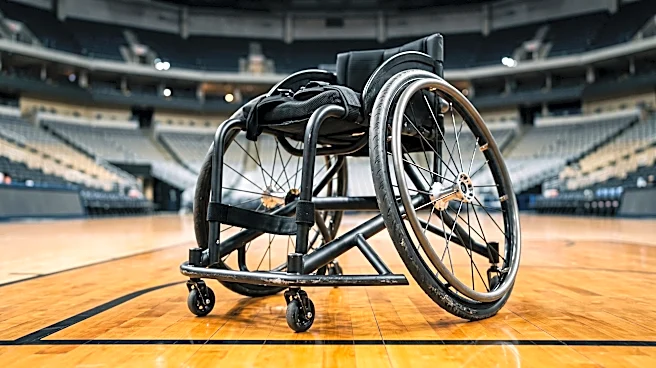
Hillevi Hansson, Sweden’s only professional female wheelchair basketball player, has publicly called for equitable funding in parasports after she was forced to self-fund her participation in a recent international tournament in Switzerland. Hansson, who
was part of a mixed European team called 'Women of Europe' (WoE), paid for her own flight and relied on a private donation for accommodation. This contrasts sharply with the Swedish men’s team, which received funding for their B division tournament earlier in the year. Hansson, who was named MVP at the International Wheelchair Basketball Federation (IWBF) B division European championship, expressed her disappointment with the lack of support and recognition for female para-athletes in Sweden, a country that prides itself on gender equality.
Why It's Important?
This situation highlights a significant disparity in sports funding and recognition, particularly within parasports and for female athletes. The lack of financial support for a top-tier athlete like Hansson not only impacts her career but also sends a discouraging message to aspiring female para-athletes. In the U.S., discussions around equal pay and funding in sports, including para-athletics, are ongoing. This incident could fuel similar conversations and advocacy efforts within American sports organizations and government bodies to ensure equitable resource allocation. It underscores the need for transparent and fair funding mechanisms to prevent discrimination based on gender or disability, ensuring that all athletes have the opportunity to compete at the highest level without financial burden. The incident also raises questions about the effectiveness of national sports federations in supporting their athletes.
What's Next?
Following Hansson's public statements, the Sweden Basketball spokesperson apologized for not responding to her requests for support, attributing it to recent organizational changes. They indicated that sporting director Lars Johansson has contacted Hansson to explore reimbursement for her costs and that new routines are being implemented to handle future support requests. The governing body also stated its commitment to rebuilding wheelchair basketball structures, aiming for a larger player pool and a women's national team. Hansson, however, has considered switching nationality due to the perceived lack of commitment to gender equality in Swedish sports. The coming months will show whether these promises translate into concrete actions and systemic changes to ensure equitable funding and support for all athletes.
Beyond the Headlines
Hansson's experience transcends a simple funding issue; it exposes deeper societal biases and systemic inequalities within sports. Her call for equality challenges the notion that Sweden is a leading country in gender equality, particularly when it comes to the practical support of female athletes with disabilities. This incident could spark a broader re-evaluation of how national sports bodies prioritize and fund different athletic groups, potentially leading to policy changes that mandate equitable resource distribution. It also brings to light the ethical responsibility of sports organizations to not only promote inclusivity in rhetoric but also to demonstrate it through tangible support. The emotional and professional toll on athletes who must fight for basic support, despite their achievements, is a critical aspect that often goes unaddressed.