
What's Happening?
Luxury European river cruises, particularly on the Rhine and Danube rivers, are experiencing significant disruptions due to unusually low water levels. This situation is attributed to reduced snow runoff in the Alps during winter and elevated summer temperatures,
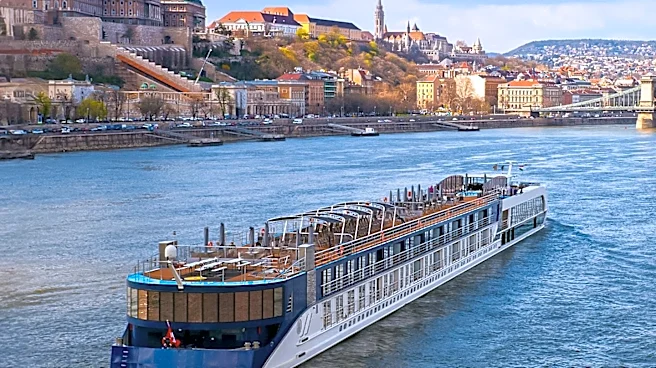
leading to severe drought conditions. Passengers on an AmaWaterways 'Romantic Danube' cruise in July found their itinerary drastically altered, with the river cruise essentially transforming into a city bus tour operating from a floating hotel. Instead of sailing to planned destinations like Vienna, Bratislava, and Budapest, the ship was docked in Melk, Austria, for three nights, with passengers bussed to various locations. This meant missing scenic daytime cruising through areas like the Wachau Valley. The dried-up Danube riverbed in Budapest has even revealed historical artifacts, including a sunken World War II boat and anti-tank mines, further highlighting the severity of the low water conditions.
Why It's Important?
The widespread disruption to European river cruises has significant implications for the U.S. tourism industry and American travelers. Many U.S. citizens book these luxury cruises, and the inability to deliver advertised itineraries can lead to substantial financial losses for tour operators and dissatisfaction among customers. The 'force majeure' clauses in U.S. travel contracts often protect companies from liability for events beyond their control, leaving travelers without automatic compensation or cancellation rights, unlike in some European countries. This situation underscores the increasing vulnerability of travel and tourism to climate change impacts, such as extreme weather patterns and droughts. It also highlights the need for travelers to consider 'cancel for any reason' insurance, as standard travel insurance may not cover such disruptions, impacting consumer confidence in booking future international travel experiences.
What's Next?
River cruise companies like AmaWaterways are adapting by investing in new ships with shallow drafts and implementing sophisticated systems to manage itinerary changes, including switching passengers between ships or relying heavily on bus transfers. They aim to minimize disruption and preserve the quality of the guest experience, offering future cruise credits as compensation for flexibility. However, these changes often occur with short notice, sometimes just two weeks before departure, or even closer to the travel date. Travelers booking European river cruises should anticipate potential itinerary modifications and consider purchasing comprehensive travel insurance that covers 'cancel for any reason' to protect their investment. The industry will likely continue to explore adaptive strategies and transparent communication with customers as climate-related challenges to river navigation persist.
Beyond the Headlines
Beyond the immediate travel disruptions, this situation serves as a stark reminder of the broader environmental crisis facing Europe's vital waterways. The low water levels in the Rhine and Danube are not isolated incidents but rather symptoms of long-term climate shifts, impacting not only tourism but also commercial shipping, agriculture, and ecosystems. The exposure of historical artifacts in the Danube, while fascinating, also signals an ecological imbalance. This event could prompt a re-evaluation of sustainable tourism practices and infrastructure development in regions heavily reliant on river systems. It also raises ethical questions for cruise lines about their responsibility to inform customers about potential climate-related disruptions and offer flexible booking options, especially when such conditions are becoming more frequent and predictable. The 'new normal' of variable river conditions may necessitate a fundamental shift in how European river cruises are marketed and operated.