






What's Happening?
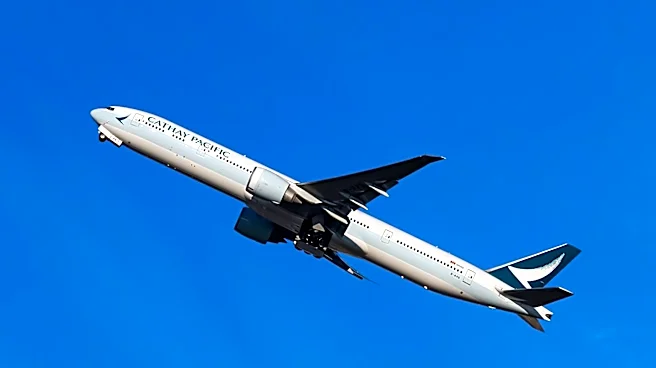
Cathay Pacific, the Hong Kong-based airline, has placed an order for 11 new Airbus A330-900 jets, with a list price totaling US$5.1 billion. This acquisition aims to bolster the airline's regional network and increase its passenger and cargo capacity.
The company also announced an order for three additional Airbus A321neo narrowbody aircraft for its budget subsidiary, HK Express, to support its growth in the Chinese mainland and other short-haul routes. While the total list price for the 11 A330-900 jets is US$5.1 billion, Cathay Pacific noted that it received 'significant price concessions' from Airbus, indicating the final cost will be lower. The A330-900 aircraft are expected to be delivered between 2031 and 2035 and will progressively replace the airline's existing fleet of mid-size widebody aircraft, primarily serving regional destinations in Asia, with potential for longer-haul routes in the future.
Why It's Important?
This significant aircraft order by Cathay Pacific underscores a strategic move to modernize and expand its fleet, reflecting a long-term outlook on air travel demand, particularly in the Asian market. The investment in fuel-efficient, state-of-the-art aircraft like the A330-900 and A321neo models highlights a commitment to operational efficiency and environmental sustainability, which are increasingly important factors in the aviation industry. For Airbus, this order represents a substantial win, reinforcing its position in the competitive aircraft manufacturing market and potentially influencing future orders from other airlines. The expansion of Cathay Pacific's regional network and increased capacity could lead to enhanced connectivity in Hong Kong, benefiting trade and tourism in the region. The airline's plan to add 150 aircraft over the next decade, if market conditions remain favorable, signals a robust growth strategy that could have ripple effects across the aviation supply chain and related industries.
What's Next?
The 11 Airbus A330-900 aircraft are scheduled for delivery between 2031 and 2035. Upon their arrival, these jets will gradually replace Cathay Pacific's current fleet of mid-size widebody aircraft, primarily serving regional routes within Asia. There is also a possibility that these new aircraft could be deployed on longer-haul destinations at a later stage, depending on market demands and operational strategies. Cathay Pacific has articulated an ambitious goal to expand its total fleet to approximately 300 aircraft over the next decade, contingent on favorable market conditions. This long-term plan suggests ongoing investment in new aircraft and a continuous focus on fleet modernization and expansion to meet anticipated growth in air travel.
Beyond the Headlines
This substantial aircraft order by Cathay Pacific extends beyond mere fleet expansion, signaling a broader strategic vision for the airline's future in a dynamic global aviation landscape. The emphasis on 'state-of-the-art, fuel-efficient' jets reflects a growing industry trend towards sustainability and reduced operational costs, driven by environmental concerns and fluctuating fuel prices. The decision to invest heavily in new aircraft, despite the long delivery timeline, indicates Cathay Pacific's confidence in the long-term recovery and growth of air travel, particularly in the Asia-Pacific region. This move could also intensify competition among airlines in the region, potentially leading to improved services and more competitive pricing for consumers. Furthermore, the 'significant price concessions' highlight the intense competition between aircraft manufacturers like Airbus and Boeing, where large orders often come with substantial discounts, impacting the financial dynamics of the aerospace industry.