




What's Happening?
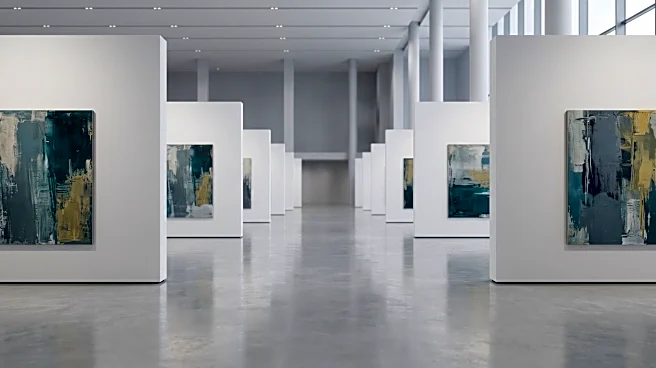
Julian Schnabel, a prominent American neo-expressionist artist born in Brooklyn in 1951, is currently featured in an exhibition at Paggeria Arte in Sassuolo, Italy. The exhibition creates a dialogue between Schnabel's monumental and visceral paintings
and the work of younger artist Pietro Moretti. Schnabel, who rose to prominence in the New York art scene of the 1980s, is known for painting on diverse surfaces such as broken plates, wax, velvet, and photographic images. His work, exemplified by pieces like 'Gill and Sanchez' (1992), continuously balances abstract gestures with figurative evocations. The exhibition aims to highlight painting's primary function of creating spaces of refuge amidst contemporary challenges, rather than offering definitive answers. This unique pairing of artists, separated by nearly five decades, explores different approaches to painting while revealing a shared artistic philosophy of gathering disparate elements to form open narratives.
Why It's Important?
This exhibition underscores the enduring international relevance of American neo-expressionist artists like Julian Schnabel. His continued presence in significant European art venues reinforces the global impact of the movement that emerged from New York in the 1980s. For the U.S. art scene, it highlights the sustained critical and commercial interest in artists who challenged traditional painting conventions. The dialogue between Schnabel and a younger artist like Moretti also demonstrates how established American art figures can influence and interact with contemporary global art trends, fostering cross-generational artistic conversations. This international exposure can further solidify Schnabel's legacy and potentially influence art market dynamics for his works, which have already seen increasing sales prices, according to art market data.
What's Next?
The exhibition at Paggeria Arte is ongoing, providing an opportunity for international audiences to engage with Schnabel's work in a new context. Future developments may include further collaborations or exhibitions that explore the intergenerational dialogue in contemporary art, potentially bringing similar curatorial approaches to U.S. institutions. The continued visibility of Schnabel's work in such settings could also lead to increased academic interest and critical re-evaluation of his contributions to neo-expressionism and contemporary art. Additionally, his participation in events like the Lucca Film Festival, where he received a Lifetime Achievement Award, suggests a continued engagement with various artistic mediums and public recognition.
Beyond the Headlines
Beyond the immediate exhibition, Schnabel's career trajectory, from his emergence in the 1980s to his current international presence, reflects broader shifts in the art world regarding the reception and re-evaluation of neo-expressionism. His use of unconventional materials and monumental scale challenged the prevailing minimalist and conceptual art trends of his time, paving the way for a more tactile and emotionally charged approach to painting. The pairing with a younger artist also raises questions about artistic lineage and influence, and how contemporary artists interpret and respond to the legacies of their predecessors. This exhibition implicitly explores the idea that art's value lies not in providing certainties, but in offering diverse perspectives and emotional resonance in a complex world.