







What's Happening?
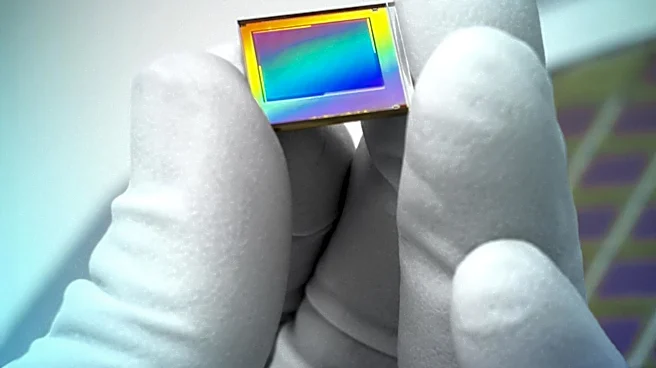
Recent advancements in wearable technology have been marked by significant developments in sensor technology. Researchers have been focusing on creating near-hysteresis-free soft tactile electronic skins, which are expected to enhance the reliability
of machine learning applications in wearables. Additionally, there is a push towards flexible sensing systems that are expected to be integral to next-generation wearables. These systems are being designed to be noise-tolerant, which is crucial for human-machine interfaces. The integration of machine learning with wearable sensors is also gaining traction, promising more intelligent and responsive devices. Furthermore, wireless technologies are being integrated into flexible and wearable sensing systems, which could lead to more seamless and efficient applications.
Why It's Important?
The advancements in wearable technology, particularly in sensor development, have significant implications for various industries, including healthcare, sports, and consumer electronics. The development of more reliable and flexible sensors can lead to more accurate health monitoring devices, which are crucial for patient care and fitness tracking. The integration of machine learning with these sensors can enhance the functionality of wearables, making them more responsive and capable of providing real-time data analysis. This could lead to improved user experiences and more personalized services. Additionally, the use of wireless technologies in wearables can facilitate better connectivity and data transfer, which is essential for the growing Internet of Things (IoT) ecosystem.
What's Next?
As these technologies continue to develop, we can expect to see more sophisticated wearable devices entering the market. Companies may focus on integrating these advanced sensors into their products to offer more comprehensive health and fitness tracking solutions. There is also potential for collaboration between tech companies and healthcare providers to develop wearables that can assist in remote patient monitoring and telemedicine. Furthermore, as machine learning algorithms become more advanced, wearables could become even more intuitive, offering predictive insights and recommendations based on user data.