



What's Happening?
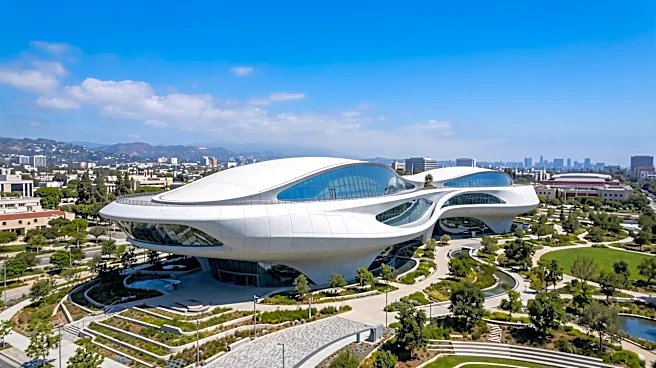
The Lucas Museum of Narrative Art in Los Angeles is facing scrutiny regarding the absence of its promised education program, as reported by Arts Editor Jessica Gelt. Despite earlier assurances from co-founders Mellody Hobson and George Lucas about an emphasis
on educational programming, the museum, which has been open for nearly two months, has yet to launch these initiatives. The museum laid off most of its education and public programming team last year, and its 10 classrooms remain closed. The Lucas Museum issued a statement indicating that its education program is 'currently in development' and will be rolled out in 2027, with a focus on high school and college students, and school field trip reservations for younger students opening in early 2027. This situation has raised questions, especially given that the museum is situated on public land with a 99-year lease contingent on various community benefits, including educational offerings.
Why It's Important?
This issue is significant because it highlights a potential disconnect between public promises and actual delivery by a major cultural institution, particularly one benefiting from public land and significant tax incentives. The absence of the promised education program at the Lucas Museum impacts the local community, especially students and residents within the three-mile radius targeted by the 'Local Access and Education Program (LEAP).' Educational outreach is often a core component of a museum's public service mission, and its delay can diminish the institution's value to the community and potentially erode public trust. For the arts and culture sector, this situation underscores the importance of accountability and transparency in fulfilling commitments made during the planning and approval phases of large-scale projects.
What's Next?
The Lucas Museum has stated that its education program will be rolled out in 2027, with school field trip reservations opening in early 2027. The museum plans to focus initially on high school and college students, with offerings for younger audiences to follow. The community and local authorities will likely monitor the museum's progress in fulfilling these commitments. Continued scrutiny from media, including Arts Editor Jessica Gelt, and the public can be expected until the educational programs are fully operational and accessible. The museum's ability to deliver on these promises will be crucial for its long-term reputation and its relationship with the Los Angeles community.
Beyond the Headlines
The controversy surrounding the Lucas Museum's education program touches upon broader ethical and civic responsibilities of cultural institutions, especially those operating on public land. The initial approval of the museum project, despite 'significant adverse impacts on the environment,' was justified by 'overriding considerations' that included robust educational programs. The delay in implementing these programs raises questions about the weight given to such promises during project approvals and the mechanisms for enforcing them. This situation could prompt a re-evaluation of how public-private partnerships for cultural developments are structured and monitored, ensuring that community benefits are not merely rhetorical but are concretely delivered. It also highlights the ongoing challenge of balancing grand artistic visions with practical community engagement.