






What's Happening?
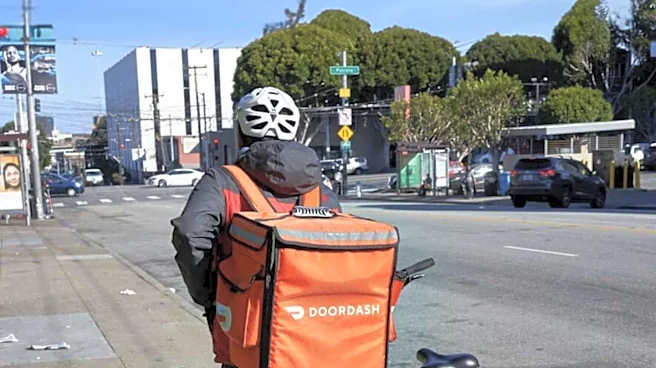
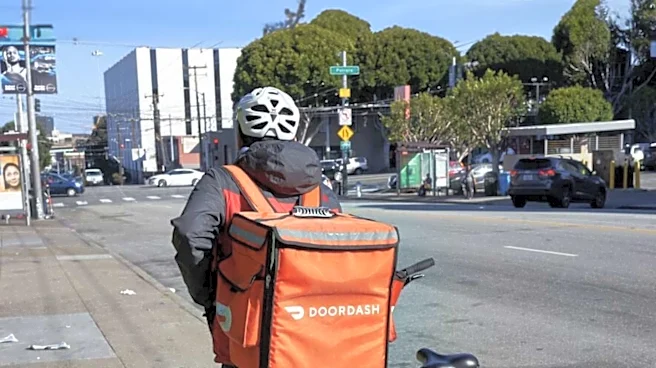
Tony Xu, CEO of DoorDash, has expressed a cautious outlook regarding the current adoption rates of AI agents within the gig economy. During recent discussions with investors, Xu advised against being 'delusional about agents,' revealing that DoorDash has processed
only 'a few hundred' orders through AI agents. This figure stands in contrast to the broader perception of AI agent integration, particularly as seen on platforms like X (formerly Twitter), where various AI agents such as Muse, Instinct, Dots, and Claude might appear to be more mainstream. Other companies in the sector also report low numbers, with Uber fulfilling only four rides via AI agents last quarter and Uber Eats processing approximately 500 AI agent orders. These statistics suggest that the practical application and widespread consumer adoption of AI agents in the service industry are still in very early stages, despite significant industry buzz and investment in artificial intelligence technologies.
Why It's Important?
Tony Xu's statements are significant because they provide a reality check on the current state of AI agent deployment in the gig economy, a sector heavily reliant on efficiency and technological innovation. His caution highlights a potential disconnect between industry hype and actual operational integration and consumer acceptance. For U.S. businesses, particularly those in the on-demand service sector, this indicates that while AI offers promising future capabilities, immediate, large-scale returns from AI agent investments may not be materializing as rapidly as some projections suggest. This could influence investment strategies, R&D priorities, and the pace at which companies integrate advanced AI solutions. Stakeholders, including investors and technology developers, might need to recalibrate their expectations regarding the timeline for AI agent profitability and widespread impact, focusing more on incremental improvements and user-centric development rather than rapid, transformative shifts.
What's Next?
In the immediate future, companies like DoorDash, Uber, and Uber Eats are likely to continue experimenting with AI agents, albeit with a more grounded understanding of current limitations. The focus may shift from broad deployment to refining specific use cases where AI agents can genuinely enhance efficiency or customer experience, rather than replacing human interactions wholesale. We can anticipate further data releases from these companies that will provide more granular insights into the performance and user feedback of AI agents. Additionally, the industry might see increased investment in overcoming the technical and user-adoption hurdles that currently limit AI agent scalability. Regulatory bodies may also begin to examine the implications of AI agents in the gig economy, particularly concerning labor practices and consumer protection, as their usage gradually expands.
Beyond the Headlines
The slow adoption of AI agents, as highlighted by Tony Xu, points to deeper challenges beyond mere technological capability. It raises questions about consumer trust, the complexity of real-world service scenarios, and the inherent human preference for interaction in certain contexts. The 'computational relativism' observed in AI-generated content, where users might confuse AI outputs with human-edited work, could also extend to service interactions, leading to dissatisfaction if AI agents fail to meet human-level expectations. This situation underscores the ethical and practical considerations of deploying AI in customer-facing roles, emphasizing the need for transparency about AI involvement and robust fallback mechanisms. The long-term shift could involve a hybrid model where AI augments human workers rather than fully replacing them, focusing on tasks that benefit most from automation while preserving human oversight for complex or sensitive interactions.