
What's Happening?
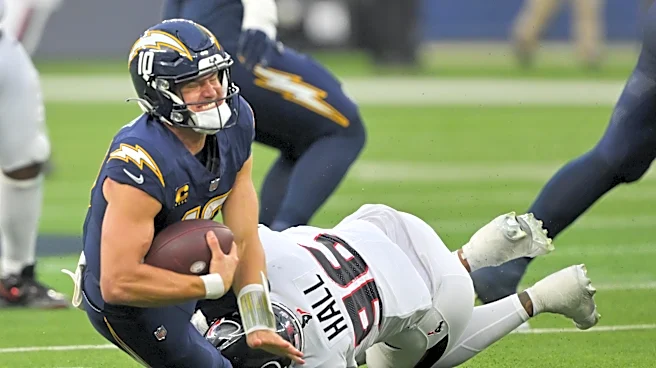
ESPN analyst Bill Barnwell has delivered a 'eulogy' for what he terms the 'Justin Herbert excuse machine' following the Los Angeles Chargers' 0-8 start to the NFL season. Speaking on 'The Domonique Foxworth
Show,' Barnwell critically assessed the narrative surrounding Chargers quarterback Justin Herbert, which has often attributed the team's struggles to factors beyond his control. Barnwell highlighted that despite significant hype around Herbert's physical talents since entering the league, he has yet to achieve postseason success or a superstar-caliber regular season. The analyst noted that the debate around Herbert has frequently focused on how the Chargers organization has held him back, rather than evaluating his on-field performance. This 'excuse machine' has, according to Barnwell, been running for seven years, enduring various team issues including coaching changes, poor running games, and offensive line deficiencies. The Chargers' current winless record has prompted Barnwell to declare an end to this long-standing media narrative.
Why It's Important?
This development is significant as it reflects a shift in how prominent NFL media figures are evaluating quarterback performance, particularly for highly touted players like Justin Herbert. The 'excuse machine' narrative, as described by Barnwell, has allowed for prolonged defense of Herbert's potential despite a lack of tangible team success. Its declared end signals a potential move towards holding quarterbacks more accountable for team outcomes, even when surrounding circumstances are challenging. This could influence future media discourse and fan expectations for young quarterbacks entering the league, emphasizing wins and playoff appearances as key metrics of success. For the Chargers, this shift in narrative could intensify pressure on the team's coaching staff and front office to build a more competitive roster around Herbert, as external factors may no longer be as readily accepted as explanations for poor performance. It also highlights the ongoing debate within NFL media between analytics-driven evaluations and traditional assessments of quarterback play.
What's Next?
With the 'Justin Herbert excuse machine' declared defunct by a prominent analyst, the immediate future will likely see increased scrutiny on Herbert's individual performance and leadership, especially if the Chargers continue their losing streak. The team faces a critical juncture, with the trade deadline approaching, which could see them make roster changes in an attempt to salvage the season or prepare for the future. If the Chargers continue to struggle, discussions will likely intensify regarding the long-term viability of the current coaching staff and general management. For Herbert, the challenge will be to demonstrate tangible improvements and lead the team to victories, thereby shifting the narrative away from excuses and towards on-field results. The media will be closely watching how Herbert responds to this heightened pressure and whether he can elevate his play to match the high expectations that have surrounded him since his entry into the NFL.
Beyond the Headlines
Beyond the immediate implications for Justin Herbert and the Chargers, Barnwell's 'eulogy' touches upon a broader cultural phenomenon within sports media: the creation and perpetuation of narratives around star athletes. The 'excuse machine' concept illustrates how media, fans, and even analysts can become invested in a particular storyline, sometimes to the detriment of objective evaluation. This can lead to a prolonged period where a player's perceived potential outweighs their actual output, creating a disconnect between expectation and reality. The eventual 'breakdown' of such a machine, often triggered by undeniable poor performance, forces a re-evaluation of priors and can be a painful process for those invested in the original narrative. This situation also highlights the tension between traditional football analysis, which often emphasizes intangibles and team context, and more data-driven approaches that prioritize individual statistics and win-loss records. The end of the 'excuse machine' for Herbert could signal a broader trend towards more results-oriented assessments in sports journalism.