




What's Happening?
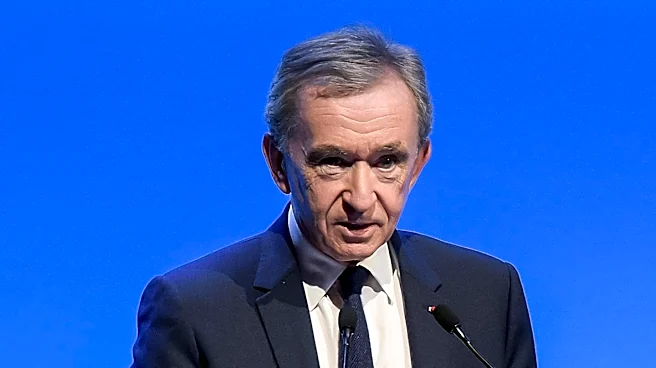
Bernard Arnault, the 77-year-old businessman, will be able to continue leading his family's structure, Agache, which controls LVMH, until he reaches 95 years old. This decision allows him to extend his tenure at the head of the luxury conglomerate, which owns
prominent brands such as Louis Vuitton and Dior. The reorganization aims to consolidate the family's power within LVMH, increasing their control to 65.55% of the voting rights. This move ensures long-term stability in leadership for one of the world's largest luxury goods companies. The change is significant for the future direction and succession planning of the luxury empire, reinforcing the family's influence over its vast portfolio of brands.
Why It's Important?
This development is important because it solidifies the long-term leadership and strategic direction of LVMH, a major player in the global luxury market. By allowing Bernard Arnault to remain at the helm for an extended period, the company ensures continuity in its vision and operations. This stability can be particularly appealing to investors and stakeholders who value consistent leadership in large, complex organizations. The increased family control over voting rights, now at 65.55%, also means that strategic decisions will likely align closely with the family's long-term interests and values, potentially influencing everything from brand acquisitions to market expansion strategies. This move could also set a precedent for other family-controlled conglomerates regarding succession planning and the retention of experienced leadership.
What's Next?
The immediate next steps will likely involve the formalization of the extended leadership tenure for Bernard Arnault within Agache. This consolidation of family power is expected to streamline decision-making processes within LVMH. Stakeholders, including investors and the luxury market, will be observing how this reinforced family control impacts the conglomerate's future strategies, particularly concerning brand development, market expansion, and potential acquisitions. The long-term implications for succession planning within the Arnault family will also be a key area of focus, as the extended tenure provides more time for a carefully managed transition of leadership in the distant future. The luxury industry will also watch for any shifts in LVMH's competitive approach under this continued leadership.
Beyond the Headlines
The decision for Bernard Arnault to remain at the head of LVMH's controlling structure until age 95 highlights a broader trend in family-controlled businesses: the desire to maintain long-term vision and control. This move underscores the unique dynamics of luxury conglomerates, where brand heritage and consistent leadership are often seen as critical assets. Ethically, it raises questions about the balance between experienced leadership and the need for fresh perspectives and innovation, especially in rapidly evolving markets. Legally, such arrangements often involve complex corporate governance structures designed to ensure family control while adhering to market regulations. Culturally, it reinforces the idea of dynastic business empires, where leadership is often passed down through generations, shaping the identity and direction of global brands for decades.