





What's Happening?
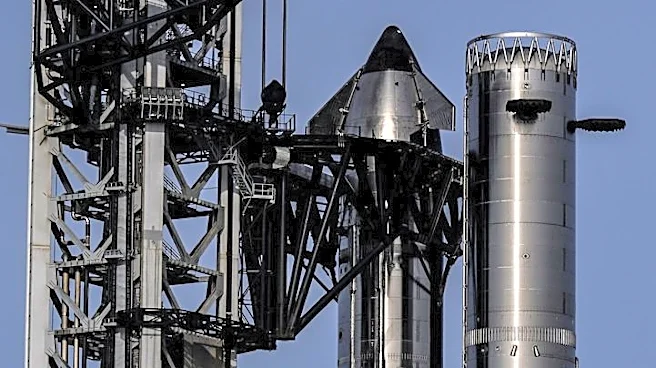
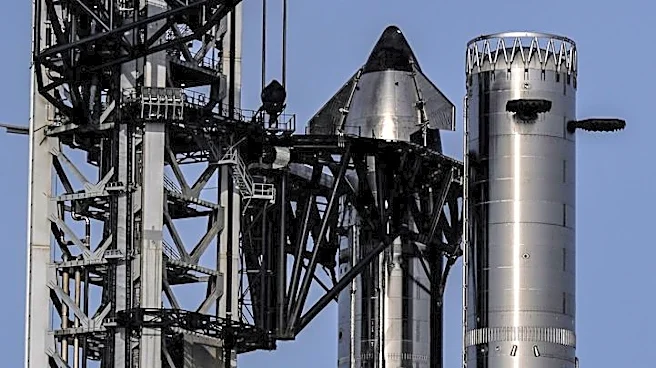
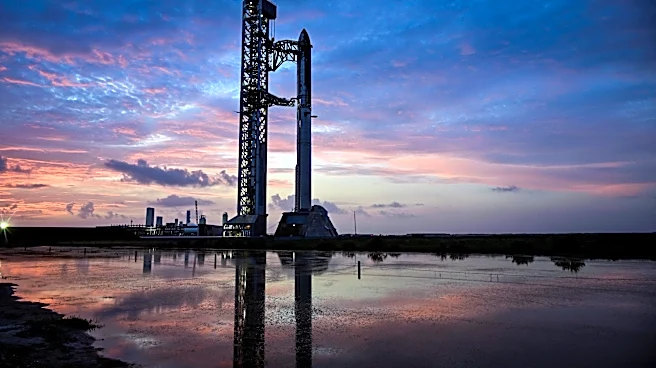
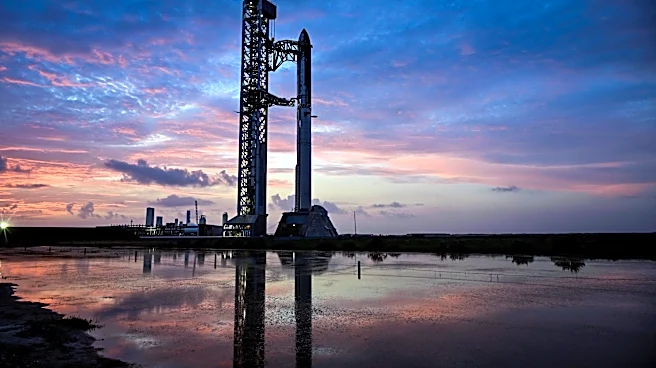
SpaceX successfully conducted a test flight of its Starship megarocket, marking significant progress in its development. The test, known as Flight 13, followed a previous aborted attempt due to engine issues. During this flight, the Starship achieved
several milestones, including a controlled splashdown of the upper spacecraft in the Indian Ocean. The Super Heavy rocket booster, which separated from the Starship two minutes into the flight, also made a controlled splashdown in the Gulf. This test was crucial as SpaceX faces pressure to prepare Starship for a NASA test flight next year, which could lead to a future moon landing. Additionally, this was SpaceX's first flight as a publicly traded company, following a recent IPO.
Why It's Important?
The successful test flight of SpaceX's Starship is a critical step towards its use in NASA's Artemis program, which aims to return humans to the moon. The ability to conduct such flights is essential for SpaceX to meet NASA's requirements for lunar missions. The test also impacts SpaceX's market position as a publicly traded company, influencing investor confidence and stock performance. The advancements in Starship's capabilities could lead to significant developments in space exploration and commercial space travel, potentially opening new opportunities for scientific research and economic growth in the space industry.
What's Next?
SpaceX will continue to refine the Starship's design and performance, with a focus on preparing for a crucial NASA test flight scheduled for next year. This involves ensuring the reliability and safety of the spacecraft for human spaceflight. The company will also work on addressing any technical challenges identified during the test, such as engine performance and fuel management. As SpaceX progresses, it will need to demonstrate the Starship's ability to perform complex missions, including lunar landings, to secure its role in NASA's Artemis program.