






What's Happening?
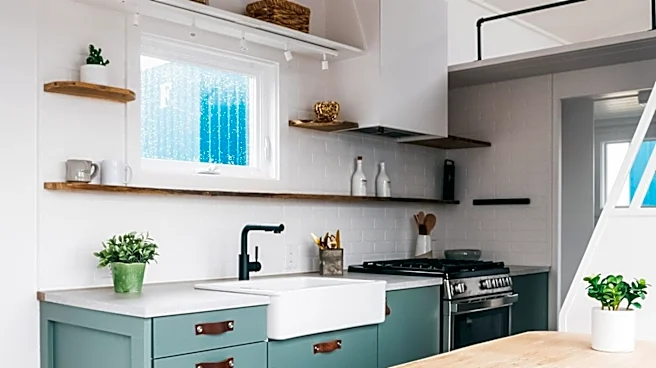
Major U.S. retailers, including Amazon, Walmart, and Home Depot, are now selling tiny homes online, making them accessible for backyard installation. These prefabricated structures range from small backyard offices to larger units equipped with full kitchens
and bathrooms. The availability of these tiny homes online, with some brands offering free installation, is presented as a solution to rising housing costs and a way for property owners to quickly add square footage. Customers can often customize layouts, finishes, and features to suit their needs, whether for a guest house, home office, craft room, or even a vacation rental in a scenic location.
Why It's Important?
The online availability of tiny homes signifies a significant shift in the U.S. housing market, offering a more affordable and flexible alternative to traditional construction. This trend directly addresses the challenge of escalating housing costs and the increasing demand for versatile living or working spaces. For consumers, it provides an accessible pathway to homeownership or property expansion without the complexities and expenses of conventional building. For the retail and construction industries, it opens up a new market segment, potentially disrupting traditional housing development models. It also reflects a growing interest in minimalist living and sustainable housing solutions, impacting urban planning and zoning regulations as communities adapt to these new housing types. This could lead to increased competition in the housing sector and innovative approaches to residential development.
What's Next?
The increasing popularity of online tiny home sales is likely to drive further innovation in prefabricated housing design and construction. We can expect more retailers to enter this market, offering a wider variety of styles, sizes, and customization options. Local governments and zoning boards across the U.S. may need to adapt regulations to accommodate the growing demand for backyard tiny homes, addressing issues such as utility hookups, property lines, and aesthetic standards. This trend could also influence the real estate market, potentially increasing property values for homes with the capacity to add accessory dwelling units (ADUs). Furthermore, the ease of online purchase and installation may lead to a broader acceptance of modular and prefabricated housing as a legitimate and desirable housing solution, impacting long-term housing trends and affordability.
Beyond the Headlines
The rise of online tiny home sales reflects a deeper societal shift towards flexibility, efficiency, and potentially, a re-evaluation of what constitutes 'home.' Beyond addressing housing costs, these structures offer solutions for evolving work patterns, such as remote work, by providing dedicated home office spaces. They also tap into a desire for simplified living and reduced environmental footprints, aligning with broader sustainability movements. The ability to purchase a home with a few clicks online challenges traditional notions of home buying as a complex, lengthy process, democratizing access to housing solutions. This trend could foster new community models, encourage multi-generational living arrangements, and even stimulate local economies through increased demand for related services like site preparation and interior design for these compact dwellings. It represents a tangible manifestation of how technology and changing consumer values are reshaping fundamental aspects of American life.