




What's Happening?
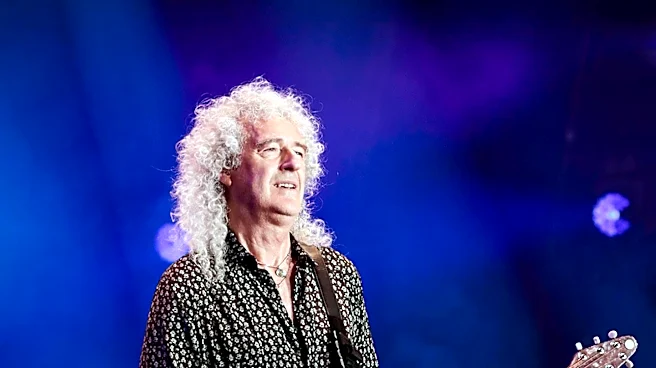
Brian May, the guitarist for the iconic British rock band Queen, has expressed significant admiration for the American rock band KISS. May described KISS as the American equivalent to Queen, noting that both bands achieved their record deals around the same
time in the early 1970s—Queen in 1973 and KISS in 1974. He highlighted that while Queen started with a musical focus and moved towards presentation, KISS began with presentation and evolved towards musicality. May particularly praised KISS's 'all-out' vision and their unwavering commitment to their dream. Paul Stanley, KISS's co-founder, guitarist, and singer, revealed that May's favorite KISS song is 'Crazy Crazy Nights' from their 1987 album. Former KISS guitarist Bruce Kulick also recounted May's appreciation for his guitar solo on the same track. Gene Simmons, another KISS member, acknowledged the long-standing friendship between him and May, and May has publicly supported Simmons during health scares, calling him a 'national treasure.'
Why It's Important?
This mutual respect between two legendary rock bands underscores the enduring influence and cross-cultural impact of rock music from the 1970s. Brian May's endorsement of KISS as their 'American counterpart' highlights the parallel paths and shared spirit of theatricality and musical prowess that defined both groups, despite their distinct approaches. For fans, this insight offers a deeper understanding of the bands' creative processes and their place in rock history. It also reinforces the idea that artistic vision and dedication, regardless of initial focus (music or presentation), are key to sustained success and critical acclaim. The camaraderie between May, Stanley, Simmons, and other band members demonstrates a rare level of mutual admiration within the competitive music industry, potentially inspiring future collaborations or discussions about their shared legacy.
What's Next?
The continued public appreciation between members of Queen and KISS could lead to further discussions, interviews, or even potential collaborations in the future, although no specific plans have been announced. Given their long-standing friendship and mutual respect, fans might anticipate more anecdotes or joint appearances. The ongoing legacy of both bands, as evidenced by such interactions, suggests continued interest in their histories and influences. This could also spark renewed interest in their discographies, particularly the songs mentioned, like 'Crazy Crazy Nights,' among new generations of rock enthusiasts. The interaction between these rock legends serves to cement their places in music history and provides valuable context for their respective artistic journeys.
Beyond the Headlines
The dynamic between Queen and KISS, as articulated by Brian May, illustrates a broader theme in music history: the interplay between musical substance and visual presentation. May's observation that Queen started with music and moved to presentation, while KISS did the reverse, highlights different pathways to achieving iconic status. This distinction is crucial for understanding how bands cultivate their brand and connect with audiences. It also touches upon the concept of authenticity in rock music—whether a band's image is an extension of their sound or a primary driver of their identity. The enduring commercial success of both bands, despite their differing initial priorities, suggests that both approaches can lead to lasting impact, challenging conventional notions of what constitutes 'true' rock 'n' roll. Their continued relevance decades later speaks to the power of strong artistic vision and dedicated execution.