






What's Happening?
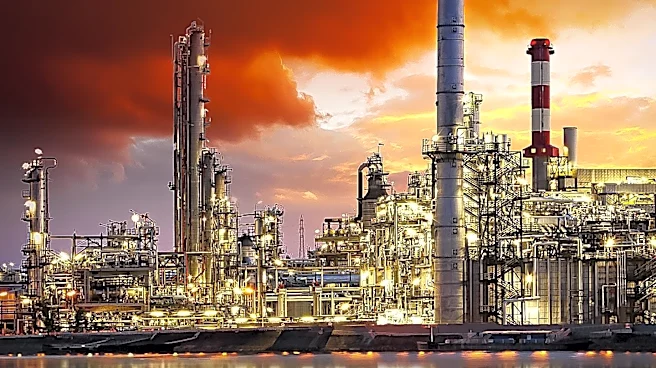
Oil prices are set to record a 20% monthly increase despite recent declines, driven by geopolitical tensions and supply disruptions. Brent crude and West Texas Intermediate have both seen significant gains, with Brent trading at $87.67 per barrel. The
ongoing hostilities between Iran and the United States have affected tanker traffic through the Strait of Hormuz, a critical oil transit route. The U.S. Strategic Petroleum Reserve is running low, which could lead to further price increases once releases stop. Meanwhile, Saudi Arabia is seeking partners for a defense coalition to secure key maritime routes.
Why It's Important?
The surge in oil prices has broad implications for the global economy, affecting everything from transportation costs to inflation rates. The geopolitical tensions in the Middle East, particularly involving major oil producers like Iran and Saudi Arabia, underscore the vulnerability of global oil supply chains. The depletion of the U.S. Strategic Petroleum Reserve adds to concerns about future price stability. These developments highlight the need for diversified energy sources and strategic reserves to mitigate the impact of geopolitical disruptions.
What's Next?
As geopolitical tensions persist, oil markets are likely to remain volatile. The U.S. and its allies may need to engage in diplomatic efforts to stabilize the region and ensure the security of oil transit routes. Energy companies and policymakers may also explore alternative energy sources and technologies to reduce reliance on volatile oil markets. The situation could lead to increased investment in renewable energy and energy security initiatives.