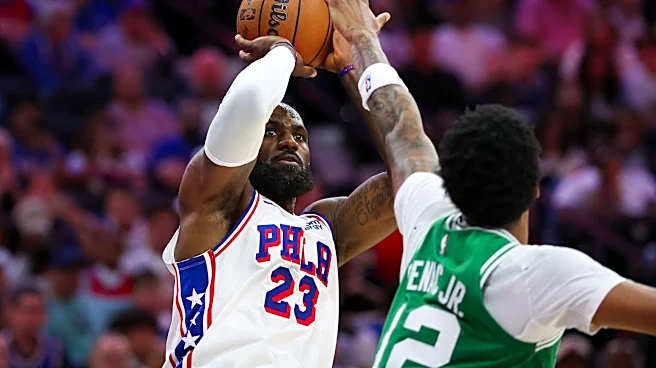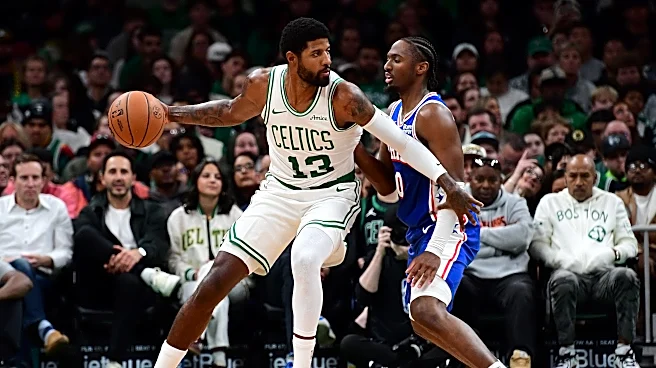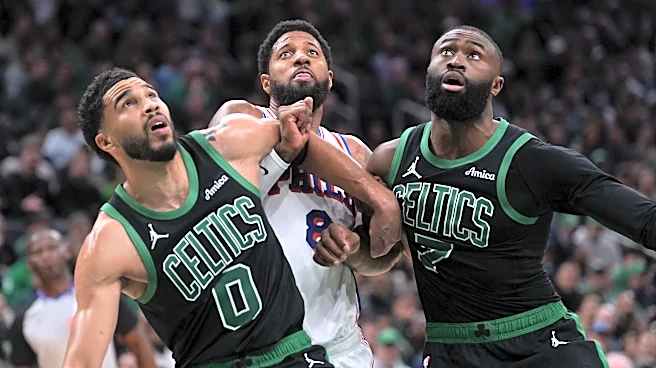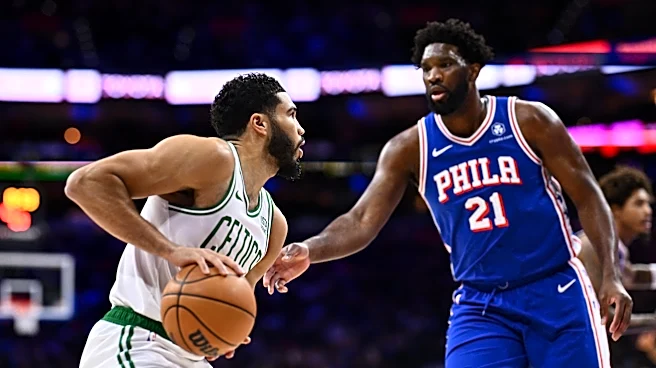



What's Happening?
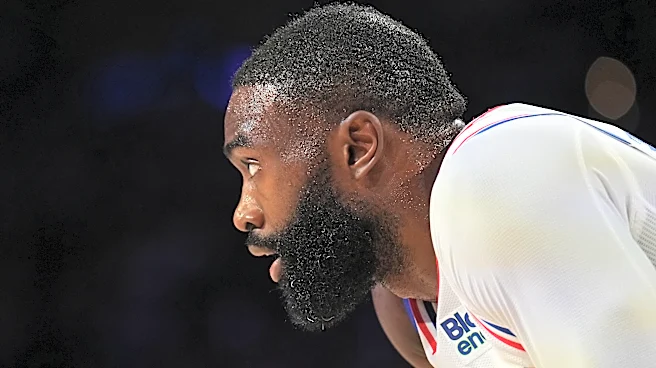
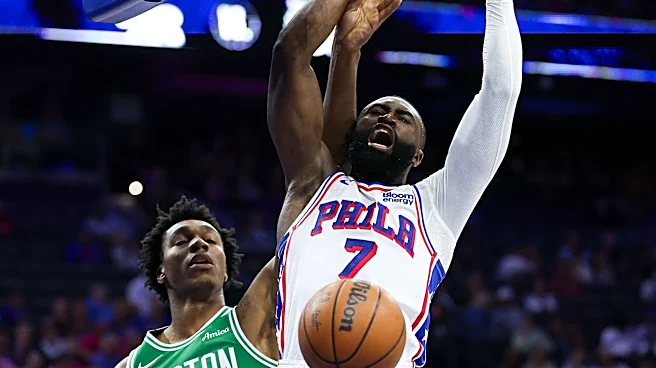
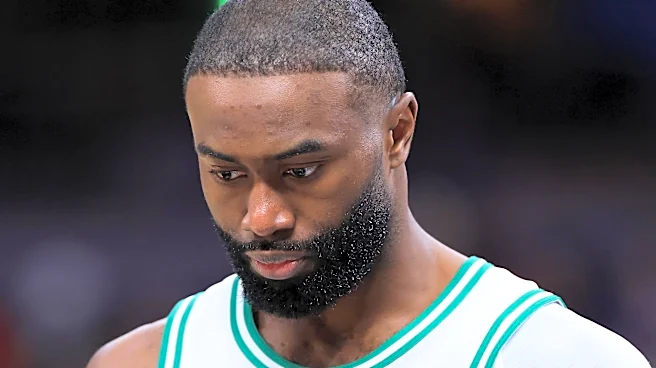
More details have emerged regarding the Boston Celtics' handling of Jaylen Brown's departure, according to ESPN's Kris Rhim. Brown reportedly did not request a trade from the Celtics. However, upon learning that Boston had attempted to trade him to the Milwaukee
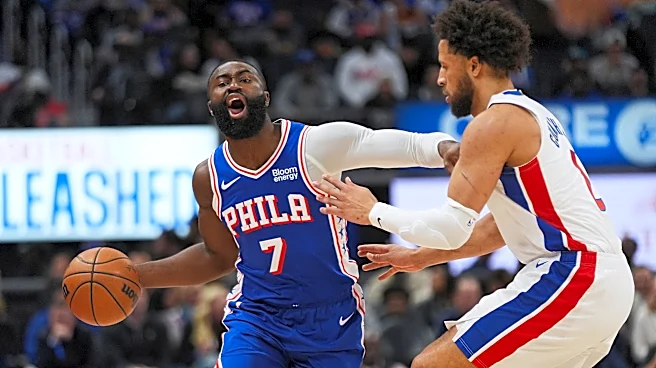
Bucks, he asked to be involved in the process of where he would be traded. The Celtics reportedly did not honor this request, instead sending him to the Philadelphia 76ers. Brown expressed his frustration, stating he was 'pissed' when he learned about the trade and even told the Celtics he was willing to remain in Boston after a failed attempt to trade him for Giannis Antetokounmpo. Despite his willingness to stay, the Celtics informed him he would be traded regardless. Brown has since joined the 76ers, where he is averaging 22.3 points, 6.7 rebounds, 4.0 assists, and 1.2 steals per game, contributing to their 9-2 start, the best record in the Eastern Conference.
Why It's Important?
This report highlights the complexities and potential friction in professional sports trades, particularly concerning player agency versus team control. For the NBA, it underscores the power dynamics between franchises and their star athletes. While the trade has seemingly benefited both the Celtics and the 76ers in terms of on-court performance, the manner in which Brown's request was reportedly ignored could have broader implications for player-team relations across the league. It raises questions about transparency and communication in high-stakes transactions. Players may feel a lack of control over their careers, potentially influencing future contract negotiations or trade demands. For fans, it offers a glimpse into the behind-the-scenes frustrations that can accompany player movements, adding a human element to what is often viewed purely as a business decision.
What's Next?
Jaylen Brown will have an immediate opportunity to make a statement against his former team when the Celtics and 76ers face off on Tuesday night. This game will be a significant event for both teams, not only for their standings in the Eastern Conference but also due to the narrative surrounding Brown's departure. The outcome and Brown's performance in this matchup could further shape public perception of the trade and the Celtics' decision-making. In the longer term, the reported handling of Brown's request might influence how other NBA players approach trade discussions or contract extensions, potentially leading to more explicit clauses regarding player involvement in future trade scenarios. The NBA Players Association may also take note of such incidents as they advocate for player rights and involvement in career-defining decisions.
Beyond the Headlines
The reported disregard for Jaylen Brown's request to be involved in his trade process touches upon deeper ethical considerations within professional sports. While teams have contractual rights, the human element of a player's career and personal life is often overlooked in the pursuit of competitive advantage. This incident could fuel ongoing debates about player empowerment and the balance of power between athletes and franchises. It also highlights the emotional toll that such decisions can take on players, as evidenced by Brown's reaction to the news. The narrative of a player being 'pissed' and throwing his phone across the room humanizes the often-transactional nature of sports trades, reminding stakeholders that these are individuals with personal investments in their careers and communities. This situation could contribute to a broader cultural shift towards greater player autonomy and transparency in sports management.