






What's Happening?
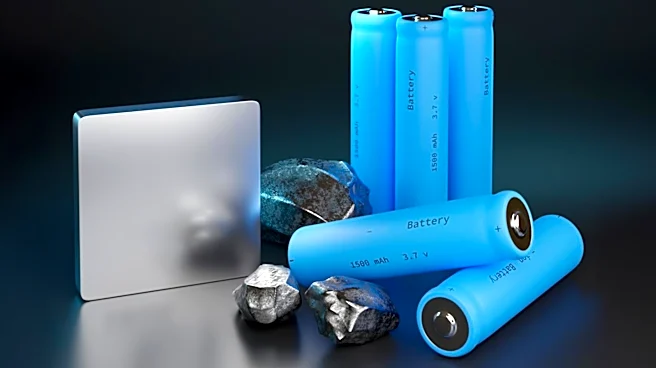
LG Energy Solution, a South Korean battery manufacturer, believes that the primary obstacle to the widespread adoption of solid-state batteries is the challenge of scaling up mass production. According to Robert Lee, President of LG Energy Solution North
America, solid-state batteries are likely to see initial applications in compact electronics and specialized devices rather than mass-market electric vehicles (EVs). Lee made these remarks during a media roundtable at the company's new plant in Lansing, Michigan. He noted that while solid-state cells offer high energy density, making them suitable for smaller form factors, manufacturing large battery cells remains difficult for most companies. LG Energy Solution is also collaborating with General Motors on lithium-manganese-rich (LMR) batteries, which feature reduced nickel and cobalt content and increased manganese, intended for large pickup trucks and SUVs by 2028, aiming for over 400 miles of range at a cost comparable to cheaper LFP batteries. Additionally, LG Energy Solution is preparing to produce 46-series lithium-ion cells at its upcoming gigafactory in Arizona, targeting next-generation EVs with structural battery packs, and is developing a pilot program for sodium-ion batteries for energy storage systems.
Why It's Important?
LG Energy Solution's assessment of solid-state battery production challenges has significant implications for the U.S. electric vehicle market and the broader energy sector. The U.S. automotive industry is heavily investing in EVs, and the promise of solid-state batteries—with their higher energy density, faster charging, and improved safety—is a key driver. If mass production remains a distant goal, it could delay the widespread adoption of these advanced batteries in American-made EVs, potentially impacting the competitiveness of U.S. automakers against international rivals who might overcome these hurdles sooner. The collaboration with General Motors on LMR batteries, specifically for large U.S. market segments like pickup trucks and SUVs, is crucial. This initiative aims to provide long-range, cost-effective battery solutions that cater to American consumer preferences, which could accelerate EV adoption in these popular vehicle categories. Furthermore, LG Energy Solution's plans for a gigafactory in Arizona and the development of sodium-ion batteries underscore a strategic effort to localize battery production and diversify energy storage solutions within the U.S., enhancing energy independence and creating domestic jobs.
What's Next?
In the immediate future, LG Energy Solution will focus on overcoming the manufacturing complexities of solid-state batteries, likely through continued research and development, and strategic partnerships. The company's North American operations, including the new Michigan plant and the upcoming Arizona gigafactory, will be critical in these efforts, particularly for the production of advanced lithium-ion cells. The collaboration with General Motors on LMR batteries will progress, with a target for their integration into large pickup trucks and SUVs by 2028. This will involve further testing and refinement to ensure the batteries meet performance and cost targets. Concurrently, the pilot program for sodium-ion batteries for energy storage systems will advance, potentially leading to new applications in grid-scale energy storage and other sectors. The industry will be watching closely for breakthroughs in solid-state battery manufacturing techniques that could accelerate their deployment in EVs.
Beyond the Headlines
The challenge of mass-producing solid-state batteries extends beyond mere technical hurdles; it touches upon economic, environmental, and geopolitical dimensions. The high cost and complexity of current solid-state battery manufacturing processes mean that initial applications will likely be in niche, high-value products, limiting their immediate impact on the broader EV market. This creates a strategic window for companies like LG Energy Solution to refine their production methods and drive down costs. Environmentally, the development of LMR batteries with reduced nickel and cobalt content, and sodium-ion batteries, signifies a move towards more sustainable and ethically sourced materials, lessening reliance on critical minerals with volatile supply chains. Geopolitically, the establishment of gigafactories in the U.S. by international players like LG Energy Solution is a direct response to government incentives and a broader strategy to secure domestic supply chains, reducing dependence on foreign manufacturing and bolstering national economic security in the burgeoning EV and energy storage sectors.