


What's Happening?
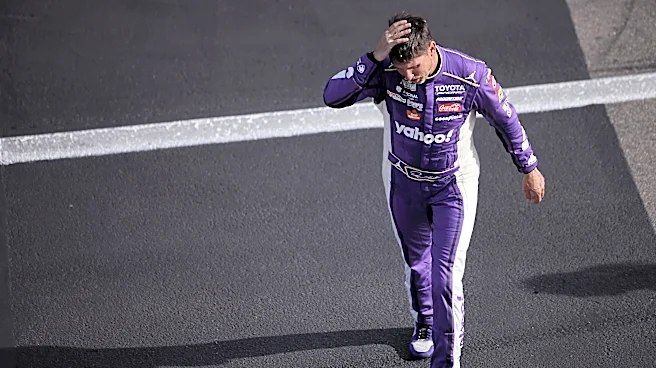
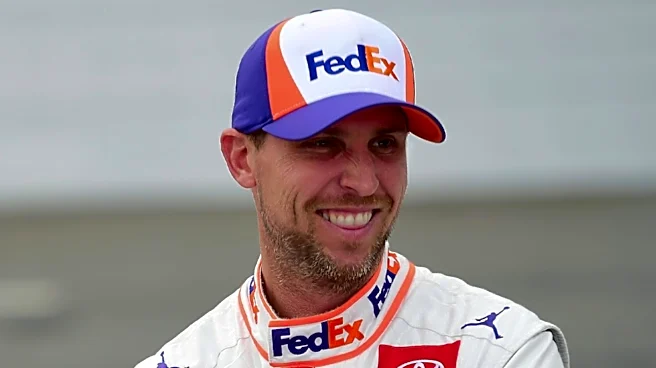
NASCAR driver Denny Hamlin has publicly stated his intention to retire from the Cup Series after the 2027 season, a decision he reiterated following his third victory of 2026 at Michigan on June 7. Hamlin, who has been with Joe Gibbs Racing (JGR) since
2006, cited slower recovery times between races as a factor, though he maintains his eyesight and reaction time remain sharp. He informed Joe Gibbs to check back with him in approximately six months regarding his decision, leaving a narrow possibility for a reversal if his early 2027 results are exceptionally strong. This announcement has initiated a critical period for JGR, which is now faced with the challenge of potentially losing a long-standing and highly competitive driver. JGR President Dave Alpern has indicated the team's desire to retain Hamlin beyond 2027, even jokingly suggesting they might 'tackle him' to prevent his departure, highlighting Hamlin's continued strong performance.
Why It's Important?
Denny Hamlin's potential retirement after the 2027 season carries significant implications for Joe Gibbs Racing and the broader NASCAR landscape. As a driver who has consistently performed at a high level, including three wins by early June 2026, his departure would create a substantial void in JGR's lineup. The team faces the dual challenge of attempting to persuade Hamlin to extend his career while simultaneously preparing for a future without him. This situation also impacts the development pipeline for JGR, particularly for younger talents like 18-year-old Brent Crews, who Hamlin himself suggested could be ready for a Cup Series seat by the end of 2027. An extension of Hamlin's tenure would prolong Crews's wait, potentially affecting his career trajectory and the team's talent management strategy. The ongoing negotiations and Hamlin's firm stance underscore the competitive nature of driver contracts and the strategic planning required by top-tier racing organizations.
What's Next?
The immediate focus will be on the December check-in between Denny Hamlin and Joe Gibbs, which Hamlin himself initiated. This meeting will be crucial in determining if there's any shift in Hamlin's retirement plans. Joe Gibbs Racing will be closely monitoring Hamlin's performance in early 2027, as he indicated that a strong start to that season could make his decision more difficult. Concurrently, JGR will likely continue to develop contingency plans, including assessing the readiness of young drivers like Brent Crews for a potential Cup Series promotion. The team's public statements suggest a strong desire to retain Hamlin, indicating that they will likely make a compelling case for him to continue racing beyond 2027. The racing community will also be watching to see if Hamlin's 'retirement language' softens or remains consistent in the coming months, as his current contract with JGR extends through 2027.
Beyond the Headlines
The situation surrounding Denny Hamlin's potential retirement highlights a broader trend in professional sports where veteran athletes, despite continued high performance, grapple with the physical and mental demands of their careers. Hamlin's acknowledgment of slower recovery times, even while maintaining sharp racing skills, points to the increasing physical toll of NASCAR racing. This scenario also brings to light the complex dynamics between established stars and emerging talents within a team. JGR's challenge is not just about retaining a winning driver but also about managing its talent pipeline effectively to ensure future competitiveness. The 'cost of persuading a legend' extends beyond financial terms to the potential impact on younger drivers awaiting their opportunity. This delicate balance between honoring a veteran's legacy and fostering new talent is a recurring theme in high-performance sports organizations.