


What's Happening?
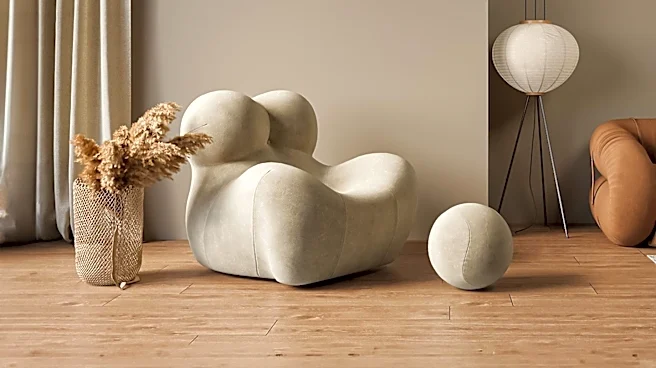
Interior designers are increasingly expressing their dissatisfaction with the widespread use of paper lanterns, particularly those inspired by Isamu Noguchi's Akari light sculptures. Originally introduced in 1951 to bring a Japanese aesthetic to modern
design, these fixtures and their numerous imitations have become so prevalent that designers like Kristina Khersonsky of Studio Keeta believe their originality has been diminished by 'thoughtless repetition.' Anita Lang of IMI Design and Sara Malek Barney of BANDD/DESIGN concur, stating that the ubiquity of these fixtures makes them feel like a 'cheap way of getting scale out of a space' and that anything overdone loses its meaning. While acknowledging the initial charm, designers feel the trend has become overexposed, prompting a call for more intentional and unique lighting choices in interior spaces.
Why It's Important?
This shift in designer sentiment highlights a broader trend in the U.S. interior design industry, where rapid adoption and subsequent saturation of a particular style can lead to its devaluation. For consumers, this means that what was once considered a chic or 'zen' design element is now viewed by professionals as uninspired or even 'cheap.' This perspective can influence purchasing decisions and the perceived value of home decor items. Manufacturers and retailers of lighting fixtures may need to adapt by diversifying their offerings beyond mass-produced imitations and focusing on unique, artisanal designs. The emphasis on intentionality and individuality by designers suggests a move away from fast-fashion interior trends towards more curated and personal spaces, potentially impacting the market for both high-end and budget-friendly home furnishings.
What's Next?
In response to the growing fatigue with paper lanterns, interior designers are advocating for more distinctive lighting solutions. Sara Malek Barney suggests opting for fixtures with similar scale but different shades to achieve a 'refreshed feel.' Anita Lang encourages the use of vintage fixtures or those with slight asymmetry and imperfections, emphasizing a handmade aesthetic over machine-perfect designs. Kristina Khersonsky points to brands like Swadoh, James Cherry, and Prangé for more novel paper fixtures. Additionally, designers recommend experimenting with composition, such as grouping multiple identical pendants in a staggered arrangement. This indicates a future trend towards unique shapes, varied materials, and thoughtful arrangements in lighting design, moving away from singular, overexposed items. Other trends, like visible Edison bulbs and synonymous LED rings over kitchen islands, are also being phased out by designers.
Beyond the Headlines
The critique of the paper lantern trend extends beyond mere aesthetics, touching upon deeper implications regarding authenticity and consumer culture in design. The 'thoughtless repetition' of a once-innovative design, as noted by Kristina Khersonsky, raises questions about the balance between accessibility and artistic integrity. When a design becomes widely imitated and mass-produced, its original artistic intent and unique appeal can be diluted. This phenomenon reflects a broader challenge in the design world, where successful concepts are often quickly replicated, leading to market saturation and a loss of perceived value. The call for intentionality from designers like Anita Lang suggests a desire to re-emphasize the narrative and personal connection behind design choices, moving beyond mere trend-following. This could foster a more sustainable approach to interior design, where pieces are chosen for their intrinsic value and personal resonance rather than their fleeting popularity, potentially encouraging consumers to invest in more enduring and meaningful home furnishings.