






What's Happening?
Breedr, a platform that creates digital records for individual cattle, has successfully raised US$27 million in Series B funding. This investment is aimed at expanding its operations to enhance traceability, efficiency, and emissions reduction across
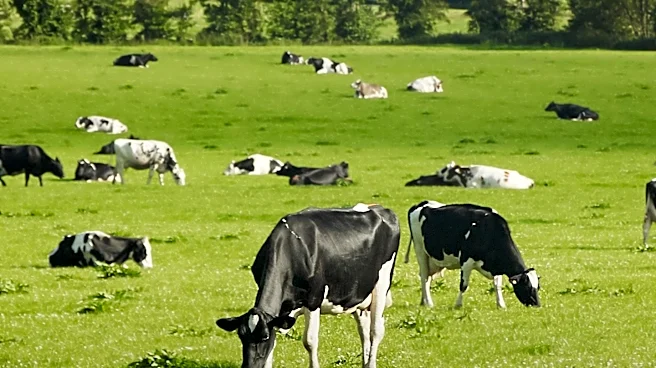
the beef supply chain. The platform tracks animals from birth to the retail shelf across ten global supply chains, connecting thousands of farmers and monitoring two million cattle. Historically, the livestock industry has relied on fragmented record-keeping, leading to inefficiencies and increased environmental impacts. Breedr's digital solution aims to address these challenges by providing comprehensive data on weight, health, and family history, enabling informed decisions on breeding, feed optimization, and health interventions. The company reports that almost US$500 million of livestock has been transacted through its system in the past year, with customer operations ranging from family ranches to organizations managing over 100,000 cattle annually. Breedr's long-term goal is to integrate all 1.3 billion cattle in the global beef supply chain into its digital system.
Why It's Important?
The expansion of Breedr's platform is significant for the U.S. agricultural sector, particularly given that the U.S. cattle herd is currently the smallest it has been since 1951, while beef demand continues to rise. By improving productivity and profitability for farmers and ranchers, Breedr could help close this supply-demand gap. The platform's ability to provide early capital access to producers, who typically face long waiting periods between purchasing young animals and generating revenue, can democratize growth opportunities for smaller operations and encourage investment in improvements. Furthermore, cattle farming is a major contributor to methane emissions, deforestation, and water depletion. By enabling better data collection and management, Breedr's technology can help farmers reduce their environmental footprint, aligning with growing consumer and regulatory pressures for sustainable practices. This initiative could lead to a more transparent and efficient beef supply chain, benefiting both producers and environmentally conscious consumers.
What's Next?
With the new funding, Breedr is expected to accelerate its expansion, aiming to integrate more farmers and cattle into its digital platform. The company will likely focus on further developing its AI capabilities to provide more sophisticated insights for breeding programs and methane reduction strategies. The increased adoption of such traceability platforms could set new industry standards for transparency and sustainability in the beef supply chain. We can anticipate continued efforts to demonstrate the platform's effectiveness in reducing methane emissions, potentially through partnerships with research institutions or environmental organizations. The success of Breedr could also encourage other agricultural sectors to adopt similar digital record-keeping and traceability solutions, fostering a broader shift towards more sustainable and efficient food production systems. The company's ambition to reach all 1.3 billion cattle globally suggests a long-term vision for transforming the entire livestock industry.
Beyond the Headlines
Beyond the immediate benefits of efficiency and emissions reduction, Breedr's technology touches upon deeper implications for the future of food production and consumer trust. The move towards digital records and enhanced traceability could fundamentally alter the relationship between consumers and their food sources, offering unprecedented transparency into the origin and production methods of beef. This could empower consumers to make more informed choices, potentially driving demand for sustainably produced meat. Ethically, the platform's focus on animal welfare through real-time health monitoring could lead to improved standards across the industry. Legally, increased data collection could facilitate compliance with environmental regulations and provide verifiable proof of sustainable practices. Culturally, the shift from traditional, fragmented record-keeping to a unified digital system represents a modernization of an age-old industry, potentially attracting new talent and investment into agricultural technology. This evolution could also spark broader discussions about data ownership and privacy within the agricultural sector.