




What's Happening?
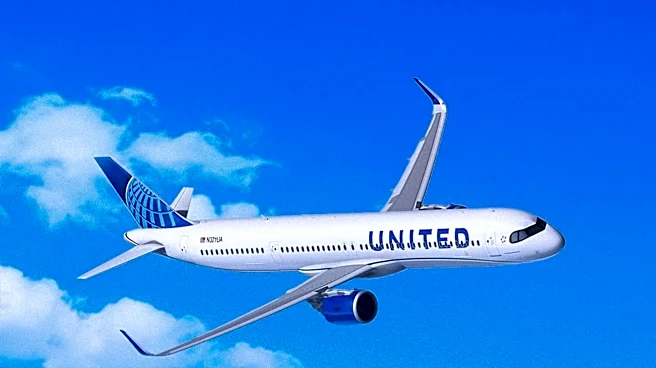
United Airlines has issued a stern warning to its 28,000 flight attendants, threatening termination for those who engage in 'conflict trading,' a practice deemed 'impermissible and fraudulent.' This involves flight attendants assigning themselves to trips
they know they cannot work due to rolling delays, thereby triggering pay protection without performing the actual work. The airline states that this practice undermines the fairness of its internal trip trading system, which is designed to offer flexibility and additional work opportunities. The issue arises when flight attendants use their knowledge of impending delays, often before the system updates, to swap into trips that will inevitably conflict with their mandatory rest periods. Once the delay is officially logged, the flight attendant is removed from the subsequent trip but still receives pay due to contractual rules, effectively getting paid for an extra day off.
Why It's Important?
This development highlights a significant challenge faced by major U.S. airlines in managing labor contracts and employee conduct, particularly concerning compensation and scheduling. The practice of 'conflict trading' can lead to increased operational costs for United Airlines, as they are obligated to pay flight attendants for work not performed. It also creates an inequitable environment among the workforce, as some employees may feel others are exploiting loopholes for personal gain. For passengers, such practices, if widespread, could indirectly contribute to higher ticket prices or impact service quality if staffing becomes an issue. The airline's move to crack down on this behavior underscores the financial and ethical implications of employees leveraging system vulnerabilities, potentially setting a precedent for how other airlines address similar issues within their own workforces and collective bargaining agreements.
What's Next?
United Airlines has indicated that violating its policy on 'conflict trading' can result in discipline or termination, citing previous arbitration cases that affirm its right to take such action. The airline has also developed software to detect 'suspicious' trip trading activity, although this technology has faced controversy in the past. Flight attendants will likely face increased scrutiny regarding their trip trading activities, and the airline may further refine its systems to prevent such exploitation. This situation could lead to further discussions or disputes with the Association of Flight Attendants (AFA-CWA), the union representing United's flight attendants, regarding the interpretation and enforcement of collective bargaining agreement rules related to pay protection and scheduling. The outcome of United's enforcement actions could influence similar policies at other airlines where trip trading is permitted.
Beyond the Headlines
The issue of 'conflict trading' delves into the broader ethical considerations of employee conduct within large organizations, especially when information asymmetry exists. Flight attendants, by virtue of their roles, often have access to real-time information about flight delays before it is widely disseminated or updated in official systems. The airline views the use of this information for personal financial benefit as an 'impermissible trade practice,' raising questions about the boundaries of employee discretion and the responsible use of internal information. This situation also reflects the ongoing tension between management's need for operational efficiency and cost control, and employees' contractual rights and desire for work-life balance and fair compensation. The use of code words by flight attendants to facilitate cash-based trip trading further illustrates the informal economies that can develop within large workforces, posing challenges for corporate oversight and compliance.