



What's Happening?
According to the October sales data from the China Passenger Car Association, Polestar, a Swedish automotive brand, experienced varied sales performance for its models in China during October 2026. The Polestar 4 led the brand's sales with 2,834 units,
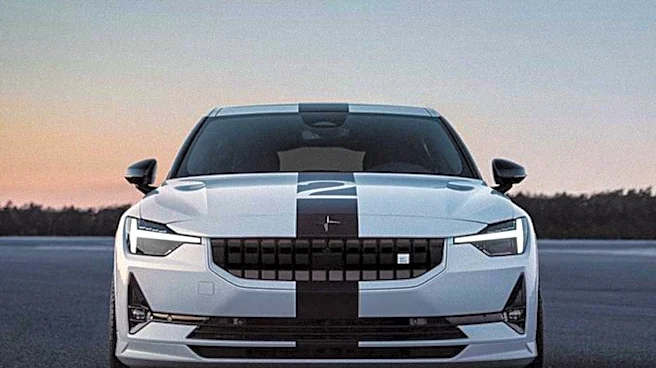
though this represented a 32% year-on-year decrease. Its year-to-date sales reached 28,020 units. The Polestar 3 saw a substantial increase in sales, rising 175% year-on-year to 366 units, placing it second for the month with year-to-date sales of 2,327 units. In contrast, the Polestar 2 recorded a significant decline, with only 140 units sold, marking a 69% year-on-year decrease. Its year-to-date sales stood at 15,519 units. These figures encompass locally-made cars, SUVs, and MPVs.
Why It's Important?
These sales figures are important for understanding the competitive landscape of the electric vehicle market in China, a crucial global market for automotive manufacturers. The mixed performance of Polestar's models suggests varying consumer reception and market dynamics for different vehicle types within the brand's portfolio. While the Polestar 3's growth indicates potential for certain segments, the declines in Polestar 4 and especially Polestar 2 sales highlight challenges in maintaining market share and appeal. This could impact Polestar's strategic decisions regarding product development, marketing efforts, and production allocations for the Chinese market. For U.S. consumers and investors, these trends in China can offer insights into the broader health and competitive pressures facing global EV brands, potentially influencing future product availability and pricing strategies in other markets, including the U.S.
What's Next?
Polestar will likely analyze these October 2026 sales data to refine its strategy for the Chinese market. Given the significant year-on-year decline for the Polestar 4 and Polestar 2, the company may need to reassess its marketing, pricing, or feature sets for these models to regain momentum. The strong growth of the Polestar 3 could lead to increased focus and investment in that particular model or similar offerings. Future reports from the China Passenger Car Association will be crucial in tracking whether these trends continue or if Polestar can implement effective strategies to stabilize or improve its sales performance across its model lineup in China. The brand's ability to adapt to the rapidly evolving Chinese EV market will be a key determinant of its success in the region.
Beyond the Headlines
The fluctuating sales performance of Polestar in China underscores the intense competition and rapid shifts within the global electric vehicle industry. The Chinese market, known for its dynamic consumer preferences and aggressive domestic competition, often serves as a bellwether for broader EV trends. Polestar's challenges, particularly with its established models, could reflect a broader industry trend where newer models gain traction while older ones struggle to maintain relevance without significant updates or price adjustments. This situation highlights the constant need for innovation and market responsiveness for international brands operating in highly competitive environments. The data also implicitly points to the importance of understanding regional nuances in consumer demand, as a model that performs well in one market may not replicate that success elsewhere.