





What's Happening?
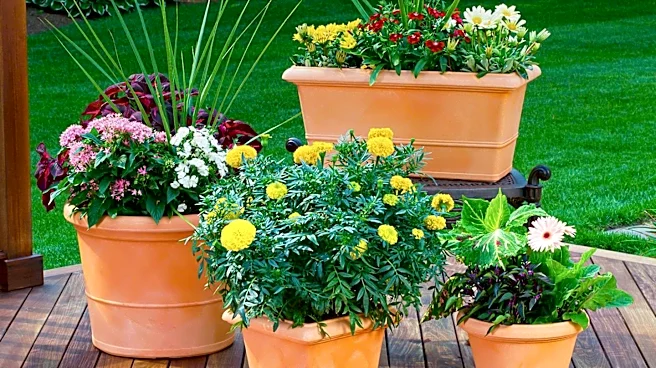
Container gardening enthusiasts can enhance their garden's aesthetics and prolong the blooming period of certain plants by employing deadheading techniques. Plants such as geraniums, blanket flowers, purple coneflowers, garden phlox, and shasta daisies
benefit from this practice. Deadheading involves removing withered blooms to encourage plants to produce more flowers instead of shifting to seed production. This method is particularly effective in August, as it can extend the flowering season into the fall. While deadheading is beneficial for many plants, it is not always advisable for those that produce seeds or berries that serve as food for wildlife.
Why It's Important?
Deadheading is a crucial gardening technique that can significantly impact the visual appeal and health of container gardens. By extending the bloom time of plants, gardeners can enjoy vibrant colors for a longer period, enhancing the overall garden experience. This practice also helps in managing plant growth and preventing unwanted self-seeding, which can lead to overcrowding. For urban gardeners or those with limited space, container gardening with deadheading offers a practical solution to maintain a thriving garden. Additionally, it supports biodiversity by allowing gardeners to selectively leave seedheads for wildlife sustenance.