



What's Happening?
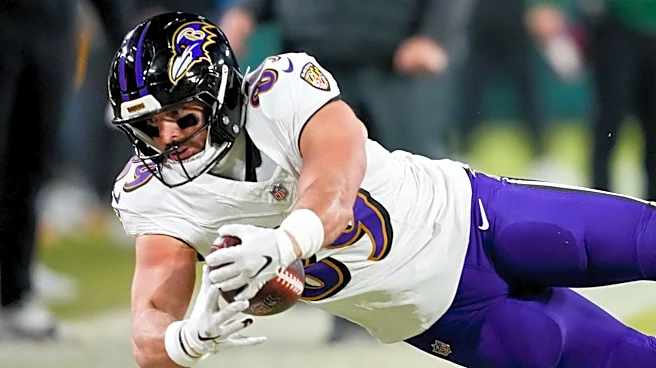
Sports analyst Kevin Ostreicher has publicly argued that the Baltimore Ravens should significantly reduce the playing time of tight end Mark Andrews. Ostreicher's recommendation comes as Andrews' performance has reportedly declined, leading to concerns
about his effectiveness on the field. Despite Andrews' desire to conclude his career with a Super Bowl victory for the Ravens, Ostreicher believes that the team's best course of action is to prioritize its rookie tight ends by giving them more snaps. This suggestion implies a strategic shift for the Ravens, moving away from a heavy reliance on their veteran tight end and towards developing newer talent. The discussion around Andrews' snap count is part of a broader conversation regarding the team's tight end production and overall offensive strategy.
Why It's Important?
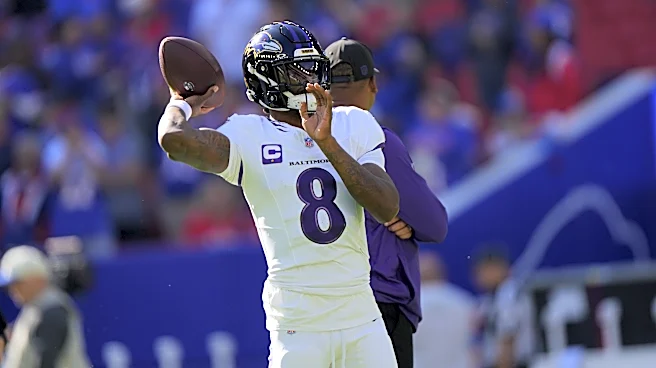
The call to reduce Mark Andrews' snaps is significant for the Baltimore Ravens as it directly impacts their offensive scheme and player development. If the Ravens follow Ostreicher's advice, it would signal a strategic pivot, potentially indicating a loss of confidence in Andrews' ability to perform at an elite level. This shift could provide valuable opportunities for rookie tight ends to gain experience and contribute more substantially to the team's offense, which is crucial for long-term roster building. However, it also carries the risk of alienating a veteran player who has been a key part of the team. The decision could influence team morale, locker room dynamics, and the perception of how the Ravens manage their veteran talent. Furthermore, a change in tight end usage could alter the team's offensive playbook, especially if the rookie tight ends bring different skill sets to the field, impacting how quarterback Jacoby Brissett, known for targeting tight ends, operates.
What's Next?
The Baltimore Ravens will face a decision regarding Mark Andrews' playing time and the integration of their rookie tight ends. While Andrews may aspire to finish his career with a Super Bowl, the team's management and coaching staff will need to weigh his veteran presence against the potential benefits of developing younger talent and optimizing offensive production. It is likely that the team will continue to monitor Andrews' performance closely and assess the readiness of their rookie tight ends for increased roles. The ongoing discussion around Andrews' snaps could lead to a gradual reduction in his playing time, or a more immediate shift depending on team needs and the performance of other players. This situation will be a key storyline for the Ravens as they navigate the remainder of the season and plan for future roster adjustments.
Beyond the Headlines
The debate over Mark Andrews' playing time highlights the inherent tension in professional sports between loyalty to veteran players and the strategic imperative to maintain competitive performance and develop future talent. For the Ravens, this situation is not just about one player's snaps but reflects broader organizational challenges in managing player contracts, age-related decline, and the integration of new talent. The public nature of Ostreicher's comments also underscores the role of sports analysts in shaping public opinion and influencing team decisions. This scenario could set a precedent for how the Ravens handle other aging veterans in the future, potentially signaling a more aggressive approach to roster turnover and youth development. The outcome will be closely watched by fans and analysts alike, as it could reveal insights into the team's long-term vision and its commitment to sustained success.