





What's Happening?
The global indoor farming market is projected to grow significantly, with its value expected to rise from USD 42.0 billion in 2025 to nearly USD 86.0 billion by 2032. This expansion is driven by the increasing adoption of controlled-environment agriculture,
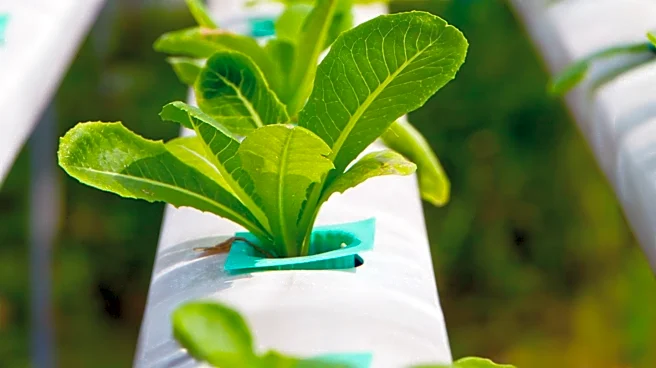
including hydroponics, vertical farming, and other innovative farming methods. The U.S. has seen a doubling of controlled-environment agriculture operations, with a focus on crops like tomatoes, lettuce, and cucumbers. The market is also seeing a shift towards high-value crops, with vertical farming gaining traction in areas where land costs and climate conditions justify the investment.
Why It's Important?
The growth of the indoor farming market is crucial for ensuring food security and sustainability, especially in urban areas with limited agricultural land. By enabling year-round crop production and reducing dependency on weather conditions, indoor farming can provide a stable food supply. This market expansion also highlights the increasing role of technology in agriculture, with advancements in LED lighting, climate control, and automation driving efficiency and reducing costs. The U.S. market's growth reflects a broader trend towards sustainable and localized food production.
What's Next?
As the indoor farming market continues to expand, there will likely be increased investment in technology and infrastructure to support large-scale operations. Companies may focus on optimizing energy use and reducing labor costs through automation. The market's growth could also lead to more partnerships between technology providers and agricultural producers, fostering innovation and improving crop yields. Additionally, the expansion into high-value crops like berries and herbs could open new revenue streams for indoor farming operators.