







What's Happening?
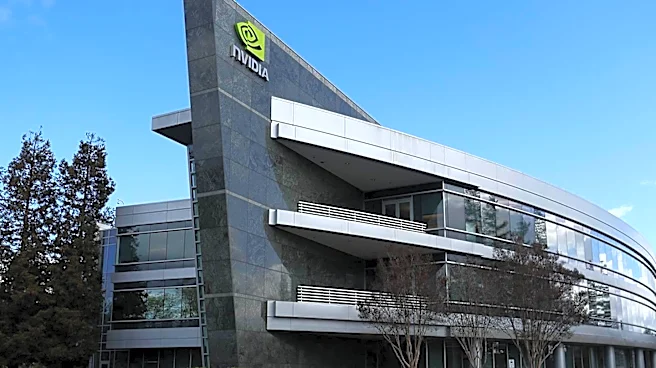
Nvidia, in collaboration with leading financial institutions including Goldman Sachs Group Inc., Blackstone Inc., Apollo Global Management Inc., KKR & Co., BlackRock Inc., and Brookfield, has announced a collective plan to finance $500 billion in AI computing
deals. This initiative aims to support the burgeoning demand for AI infrastructure and broaden Nvidia's customer base beyond major hyperscalers like Microsoft Corp. and Amazon.com Inc., which are increasingly developing their own components. Nvidia's CEO, Jensen Huang, publicly unveiled the effort after months of discussions, with Nvidia itself committing to backstop up to 25% of individual opportunities. The financing will primarily target AI startups such as Anthropic PBC and OpenAI, ensuring they can acquire the necessary chips to fuel their growth. The commitment has no set timeframe and combines existing discussions with future demand forecasts.
Why It's Important?
This massive financing plan is crucial for accelerating the development and deployment of artificial intelligence technologies across various industries. By providing substantial capital, it aims to alleviate financial barriers for AI startups, ensuring continued demand for Nvidia's essential chips. For the financial sector, it represents a significant new frontier for investment, with major firms positioning themselves to collect fees from these deals and tap into the growing AI market. The initiative could also reshape the landscape of AI infrastructure development, fostering innovation and competition. However, concerns have been raised about the potential for 'circular financing' and the risk of an AI bubble, as well as the long-term valuation of the underlying chips.
What's Next?
The participating financial firms will now engage with their clients, including sovereign wealth funds, pension funds, and insurance companies, to gauge their appetite for investing in the debt associated with these AI computing deals. A significant portion of the funding is expected to be raised through private credit markets, but the sheer scale of the initiative will also necessitate tapping into public markets, potentially through large bond issuances by special vehicles. These vehicles would lease chips to Nvidia's clients. The success of this financing model could influence future large-scale technology investments and the structure of partnerships between tech giants and financial institutions.
Beyond the Headlines
This $500 billion financing plan highlights the unprecedented capital requirements for building out advanced AI infrastructure and the deep integration of the tech and financial sectors. It raises questions about the sustainability of such rapid growth and the potential for market oversupply if demand does not keep pace with investment. The involvement of major Wall Street players also signifies a broader institutional embrace of AI as a critical economic driver, potentially shifting investment strategies across various asset classes. Furthermore, the plan's structure, with Nvidia backstopping a portion of the deals, reflects a strategic move to de-risk investments for financial partners while securing its own market dominance in the AI chip sector, potentially setting a new standard for how technology development is financed at scale.