








What's Happening?
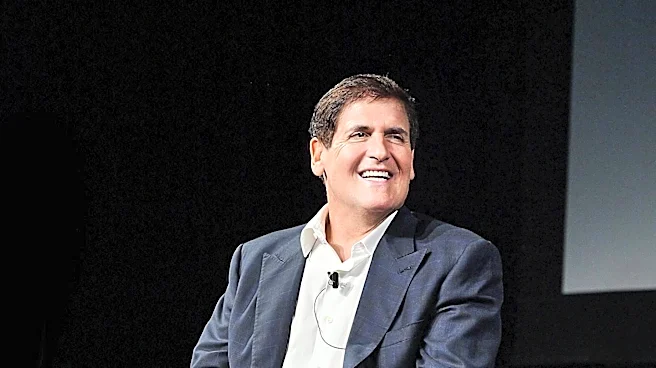
Billionaire investor Mark Cuban is urging Gen Z job seekers to focus on securing any employment, even in fast food, rather than waiting for an ideal role. Speaking on 'The Diary of a CEO' podcast and to Fortune, Cuban emphasized that early career jobs,
regardless of their glamour, provide essential skills like working on a schedule, developing interpersonal abilities, and understanding workplace dynamics. He cited his own diverse early work experiences, which included selling trash bags and bartending, as well as Amazon founder Jeff Bezos's teenage job at McDonald's, and his own shift at Dairy Queen. Cuban argues that demonstrating the ability to take responsibility, put in effort, and advance within any organization is crucial for future employers. He believes that a significant career upgrade can take two to three years, and young workers should not let initial frustrations deter them from gaining valuable experience.
Why It's Important?
Cuban's advice carries significant weight for the U.S. job market, particularly for Gen Z graduates facing a challenging economic landscape. His perspective highlights a potential disconnect between young job seekers' expectations and the realities of career progression. By advocating for practical experience over perceived prestige, Cuban is encouraging a mindset shift that could lead to increased employment rates and a more skilled entry-level workforce. This approach could benefit industries struggling to fill positions, as it emphasizes the development of fundamental work ethic and adaptability. For young workers, embracing this philosophy could accelerate their professional growth, making them more competitive and resilient in a dynamic job market. It also underscores the value of transferable skills gained in any work environment, which are often overlooked in the pursuit of 'dream jobs.'
What's Next?
Following Cuban's advice, it is anticipated that more Gen Z individuals might consider a broader range of entry-level positions, including those in service industries, to gain initial work experience. This shift could lead to a more robust pipeline of candidates for various sectors and potentially alleviate some labor shortages. Employers might also adapt their hiring strategies, placing greater emphasis on demonstrated work ethic and transferable skills rather than solely on academic achievements or specific industry experience for entry-level roles. Educational institutions and career counselors may also integrate this perspective into their guidance, encouraging students to view all work experiences as valuable stepping stones. The long-term impact could be a generation of workers with stronger foundational skills and a more pragmatic approach to career development.
Beyond the Headlines
Cuban's counsel touches upon a deeper cultural and economic shift regarding career expectations among younger generations. In an era often characterized by the pursuit of passion and purpose from the outset, his message serves as a grounding reminder of the importance of foundational work. This perspective aligns with sentiments from other prominent CEOs, such as Google's Sundar Pichai and Nvidia's Jensen Huang, who suggest that early career decisions are less defining than often perceived and that resilience is built through navigating imperfect circumstances. The emphasis on learning to 'reduce the stress of your boss' and 'getting along with coworkers' highlights the enduring value of soft skills in professional success. This advice could foster a more adaptable and less entitled workforce, ultimately contributing to a more dynamic and productive U.S. economy.