






What's Happening?
OXMAINT AI has launched an advanced maintenance management software designed to revolutionize MRO (Maintenance, Repair, and Operations) spare parts demand forecasting for manufacturing plants. Unlike traditional forecasting methods that rely on trend
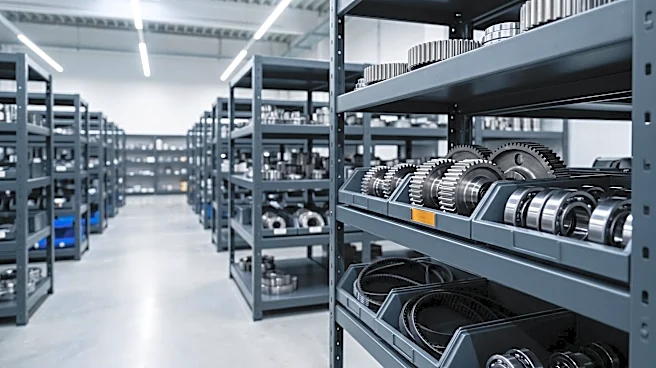
extrapolation, OXMAINT AI's system integrates four critical signals: usage history, failure patterns, lead time, and criticality. This approach addresses the inherent challenges of MRO demand, which is often intermittent, characterized by long periods of zero demand followed by sudden spikes due to equipment failures. The software aims to optimize inventory levels by accurately predicting when parts will be needed, thereby reducing both overstocking and stockouts. It processes real issue history from past work orders, analyzes failure rates and Mean Time Between Failures (MTBF), incorporates true supplier lead times, and assesses the cost of a stockout to determine a part's criticality. This comprehensive analysis allows for more precise reorder points and safety stock calculations, ensuring that the right parts are available when machines require them.
Why It's Important?
This development is crucial for the U.S. manufacturing sector, which frequently grapples with inefficient MRO inventory management. Traditional forecasting often leads to significant financial losses due to either excessive capital tied up in unnecessary stock or costly production downtime caused by unavailable critical parts. OXMAINT AI's solution directly tackles these issues by providing a more accurate and dynamic forecasting model. By optimizing spare parts inventory, manufacturing companies can expect to see a reduction in carrying costs and an improvement in operational efficiency. The ability to forecast demand based on actual failure data and criticality means that resources are allocated more effectively, preventing line stoppages and enhancing overall productivity. This shift from reactive to proactive maintenance planning can significantly impact the bottom line for manufacturers, making their operations more resilient and cost-effective in a competitive global market. Furthermore, the system's ability to link compatible parts under a single record streamlines inventory, reducing redundancy and improving stock visibility.
What's Next?
Manufacturers utilizing OXMAINT AI's software can anticipate a more streamlined approach to MRO inventory management. The system's continuous tracking of usage and accuracy will refine forecasts over time, leading to even greater precision in stock levels. Companies are encouraged to integrate this AI-powered solution to move away from spreadsheet-based planning and leverage real-time data for decision-making. The focus will be on implementing the software to set reorder points, manage safety stock, and identify critical parts that require generous stocking versus those that can be kept lean. The goal is to shift capital from slow-moving, unnecessary inventory to essential parts that prevent operational disruptions. This will likely lead to a broader adoption of AI-driven solutions in industrial maintenance, as companies seek to minimize costs and maximize uptime. The software's ability to link PM (Preventive Maintenance) schedules with parts planning also suggests a future where maintenance and inventory are even more tightly integrated.
Beyond the Headlines
The introduction of OXMAINT AI's MRO forecasting system highlights a broader trend towards intelligent automation and data-driven decision-making in industrial operations. This technology not only addresses immediate inventory challenges but also fosters a culture of predictive maintenance, moving away from traditional reactive approaches. The ethical implications revolve around the responsible use of AI to optimize human labor, ensuring that technology enhances rather than replaces skilled workers in maintenance roles. Legally, the accuracy and reliability of such AI systems will be paramount, especially in industries where equipment failure can have significant safety or environmental consequences. Culturally, this represents a shift in how manufacturing views its supply chain and maintenance functions—from cost centers to strategic assets that can drive competitive advantage. The long-term impact could be a more sustainable manufacturing ecosystem, where resources are utilized more efficiently, waste is reduced, and operational resilience is significantly enhanced, contributing to overall economic stability and growth.