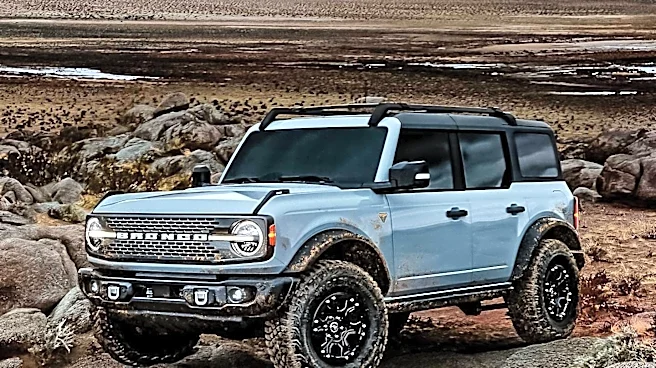







What's Happening?
Ford Motor Company is facing a class action lawsuit filed in the U.S. District Court for the District of Delaware concerning alleged defects in the Molded-in-Color (MIC) hard tops of its 2021-2026 Bronco models. The lawsuit, Holbert v. Ford Motor Company,
was initiated by a West Virginia man who purchased a 2022 Ford Bronco. He claims that the MIC hard top on his vehicle developed significant cracking and other issues after his factory warranty expired. The complaint alleges that the outer skin of the roof panel separates from underlying layers, leading to bubbling, cracking, fading, and loosening, potentially allowing water intrusion. The plaintiff asserts that Ford was aware of this defect, citing an August 2021 public statement from the company acknowledging quality issues with supplier-produced MIC roofs and plans for replacements on certain vehicles. Despite a May 2026 recall for some 2021-2022 Broncos with MIC roof panels that could crack, delaminate, or detach, the plaintiff's vehicle was not covered, and he claims Ford has not extended warranty coverage for owners experiencing roof failures post-warranty. These are currently allegations, and no court has yet found Ford liable.
Why It's Important?
This lawsuit carries significant implications for Ford Motor Company, potentially leading to substantial financial liabilities if the court finds in favor of the plaintiffs. A ruling against Ford could result in considerable costs for repairs, replacements, diminished vehicle value, and other damages for affected Bronco owners. Beyond direct financial impact, the case could damage Ford's brand reputation, particularly for its Bronco line, which is a key product in the competitive SUV market. Consumer trust may erode if it is proven that Ford knowingly concealed a defect. For consumers, especially current and prospective Bronco owners, the outcome will determine whether they receive compensation for alleged defects and whether Ford will be compelled to offer broader warranty extensions or recall programs. The case also highlights broader issues of manufacturer accountability regarding product quality and transparency about known defects, potentially influencing how other automotive companies handle similar situations.
What's Next?
The lawsuit is in its early stages, and the next steps will involve legal proceedings such as discovery, where both parties will exchange information and evidence. Ford Motor Company will likely file a response to the allegations, and the court will determine whether to certify the class, which would allow a larger group of affected Bronco owners to join the lawsuit. If the class is certified, eligible owners would typically receive formal notice of their rights. The case could proceed to trial, or the parties might engage in settlement negotiations to avoid a lengthy and costly legal battle. The outcome could lead to a court-ordered remedy, such as a recall expansion, extended warranty program, or a settlement fund for affected owners. Owners of 2021-2026 Ford Broncos with MIC hard tops are advised to document any issues with dated photos and videos, report problems to Ford dealers, and retain all repair records, as this evidence could strengthen their claims.
Beyond the Headlines
This lawsuit delves into deeper issues concerning product liability and corporate responsibility within the automotive industry. The allegation that Ford knew about the defect and concealed it raises ethical questions about a manufacturer's duty to inform consumers about potential product flaws. If proven, it could set a precedent for how courts view corporate transparency regarding known defects, especially when those defects manifest after warranty periods. The case also highlights the complexities of supply chain management, as the MIC panels are reportedly made by a German supplier, Webasto. While Ford is the primary defendant, the involvement of a supplier could lead to further legal actions or changes in supplier contracts and quality control protocols across the industry. Furthermore, the lawsuit underscores the power of class action litigation in holding large corporations accountable and providing recourse for numerous consumers who might otherwise lack the individual resources to pursue legal action.