





What's Happening?
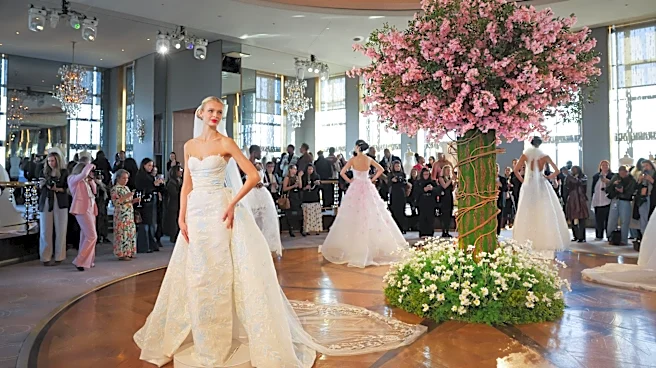
For 2027 bridal fashion, two distinct waistline styles, the basque waist and the drop waist, are gaining prominence. Both styles sit below the natural waist, but they differ in their shape and aesthetic. A basque waist is characterized by a V or U shape that
dips at the center front, creating a sculpted and defined bodice. This style often pairs with structured bodices, corsetry, and full ballgown or A-line skirts, offering a vintage-inspired feel. In contrast, a drop waist extends the bodice in a straight, horizontal line, typically around the high hip. This design, reminiscent of 1920s silhouettes, aims to create a longer, leaner line through the torso and is frequently seen with modern structured corsetry and clean seams. The choice between these two waistlines significantly influences the overall movement and silhouette of a wedding gown.
Why It's Important?
The resurgence of basque and drop waistlines in bridal fashion signifies a shift in design preferences, moving towards more structured and elongated silhouettes. This trend impacts the bridal industry by influencing designers' collections, bridal boutique inventories, and ultimately, consumer choices. For brides, understanding these distinct waistline characteristics is crucial for selecting a gown that complements their body type and desired aesthetic, whether they prefer a romantic, sculpted look or a modern, lean profile. The emphasis on these specific waistlines also highlights the enduring influence of historical fashion on contemporary design, as elements from past eras are reinterpreted for modern tastes. This trend could lead to increased demand for specific types of corsetry and bodice construction, affecting manufacturing and tailoring practices within the bridal sector.
What's Next?
As these waistline trends gain traction for 2027, bridal designers are expected to further integrate basque and drop waist styles into their upcoming collections. Bridal boutiques will likely adjust their inventory to feature a wider selection of gowns showcasing these silhouettes, offering brides more options during their dress selection process. Stylists will play a key role in educating brides on the differences and benefits of each waistline, helping them visualize how various accessories like sleeves, toppers, jewelry, and veils can enhance these specific gown structures. The continued evolution of these trends may also inspire innovations in fabric use and embellishments to complement the defined lines of basque and drop waist designs, potentially leading to new styling techniques and bridal fashion narratives.
Beyond the Headlines
The prominence of basque and drop waistlines in bridal fashion extends beyond mere aesthetic preference, touching upon broader cultural and psychological aspects of wedding attire. The basque waist, with its sculpted and defined form, can evoke a sense of traditional romance and formality, appealing to brides seeking a classic and elegant look. Conversely, the drop waist, with its elongated and modern lines, might resonate with brides who favor a contemporary, minimalist, or fashion-forward aesthetic. This trend reflects a desire for distinctiveness and personalization in wedding dresses, allowing brides to choose a silhouette that not only flatters their figure but also expresses their individual style and the overall theme of their wedding. The emphasis on waistlines also underscores the enduring significance of the bodice as a focal point in bridal design, shaping the gown's structure and the wearer's posture.