






What's Happening?
Perth-based OreNova Engineering has utilized its proprietary artificial intelligence (AI)-based tools to significantly accelerate the study phase for Horizon Gold Limited’s Gum Creek gold project in Western Australia. The company's AI technology automates
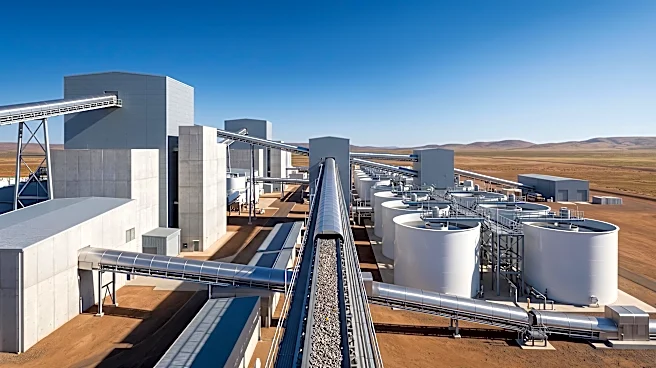
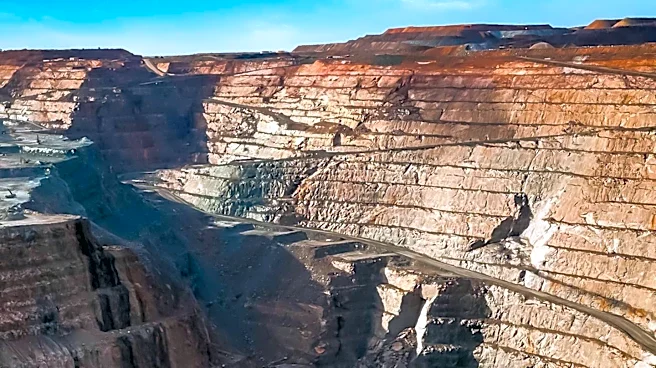
various aspects of mineral processing plant design, including material and equipment selection, datasheet development, mechanical equipment lists, capital and operating expenditure calculations, process flow diagrams, and 3D modeling. This automation delivers high-quality results with approximately 95% accuracy in a fraction of the time and cost compared to conventional methods. For the Gum Creek project, OreNova's tools helped complete a Preliminary Feasibility Study (PFS) level design within 13 days, with capital and operational costs falling within 0.3% and 1.1% of the Definitive Feasibility Study (DFS) results. The DFS for Gum Creek outlines a circa-100,000 oz/y gold development with an upfront capital cost of A$350 million, projecting an average gold production of 88,000 oz/y over an initial 10-year mine life.
Why It's Important?
This application of AI in mining engineering is crucial for the U.S. and global mining industry, as it demonstrates a significant leap in efficiency and cost-effectiveness for project development. By drastically reducing the time and resources required for feasibility studies, OreNova's technology can accelerate the timeline for bringing new mining projects online. This has direct implications for capital allocation, risk assessment, and overall project profitability. The ability to achieve high accuracy in cost and operational estimates at an accelerated pace can attract more investment into the mining sector by providing greater certainty and faster returns. For engineering firms, this technology allows them to bid for more projects and meet tighter deadlines, enhancing their competitive position. Ultimately, the widespread adoption of such AI tools could lead to a more agile and responsive mining industry, capable of adapting quickly to market demands and technological advancements.
What's Next?
OreNova plans to further enhance its AI software, aiming to increase accuracy levels to 99% next year with the addition of new software modules. This continuous improvement will further reduce engineering hours and accelerate project development timelines. The success at Gum Creek is expected to serve as a case study, encouraging broader adoption of AI-based tools in the mining sector for various stages of project development. As the technology matures, it could be applied to optimize other aspects of mining operations, from exploration to production and environmental management. The increased efficiency and reduced costs offered by AI are likely to drive further investment in technological innovation within the mining industry, potentially leading to a paradigm shift in how mineral projects are planned and executed globally.
Beyond the Headlines
The integration of AI into mining engineering, as showcased by OreNova, represents a profound shift towards digital transformation in heavy industries. Beyond the immediate benefits of speed and cost reduction, this technology raises important questions about the future of engineering roles, the ethical implications of AI-driven decision-making, and the potential for increased automation to reshape the workforce. The ability of AI to perform complex calculations and generate detailed designs with high accuracy could free human engineers to focus on more strategic and creative problem-solving. Furthermore, the data-driven insights provided by AI can lead to more sustainable mining practices by optimizing resource utilization and minimizing environmental impact. This development also highlights the growing convergence of advanced technology and traditional industries, signaling a future where AI is not just a tool but an integral part of industrial innovation and competitiveness.